2026 EITC Updates: Maximize Your Earned Income Tax Credit Refund

Anúncios
Key Updates: The 2026 Earned Income Tax Credit (EITC) – Are You Missing Out on an Average Refund of $2,500?
Anúncios
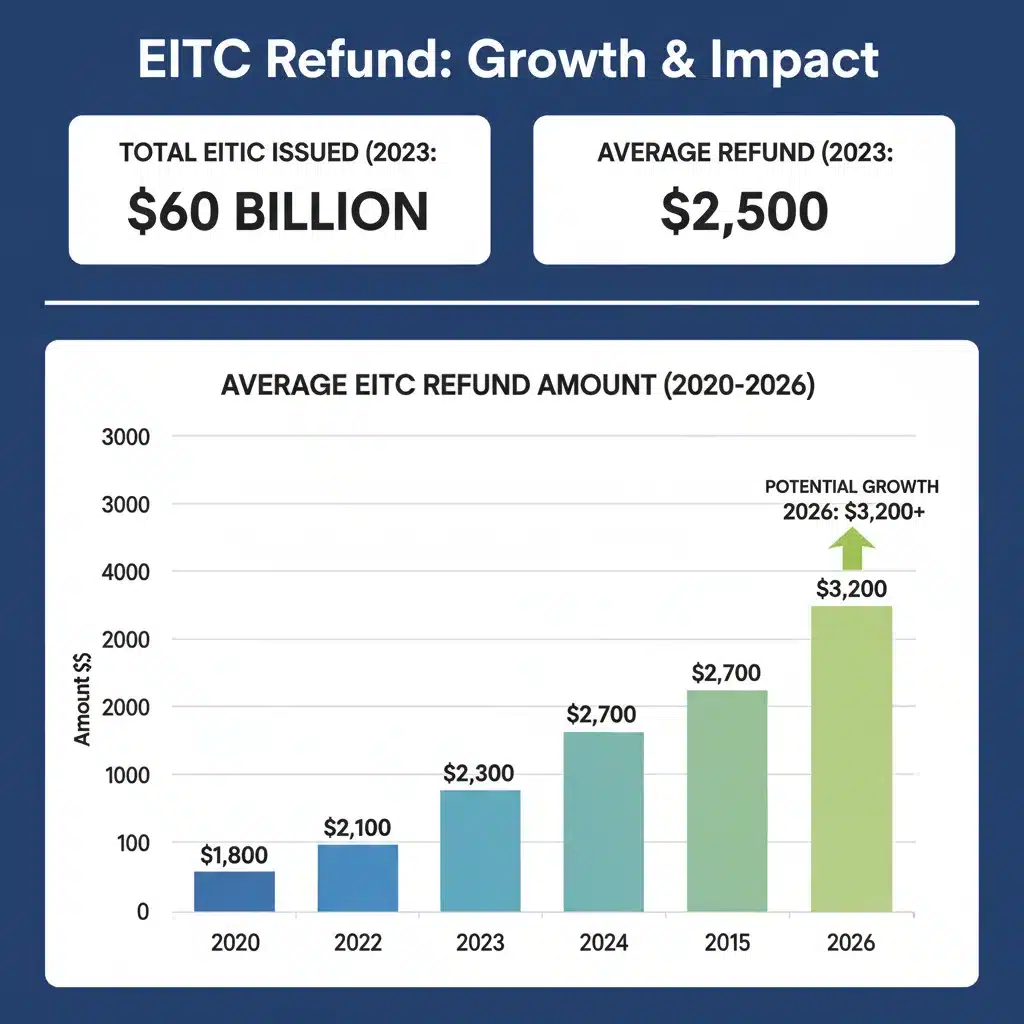
The Earned Income Tax Credit (EITC) is one of the most powerful and effective anti-poverty tools in the United States, designed to help low-to moderate-income working individuals and families. For many, it represents a significant financial boost, with the average refund often reaching an impressive $2,500. As we look ahead to the 2026 tax year, understanding the latest 2026 EITC Updates is crucial to ensure you claim every dollar you’re entitled to. This comprehensive guide will delve into what’s new, who qualifies, and how you can maximize your EITC benefit, preventing you from missing out on this vital financial support.
What is the Earned Income Tax Credit (EITC)? A Refresher for 2026
Before diving into the specifics of the 2026 EITC Updates, let’s briefly revisit the core concept of the EITC. Established in 1975, the EITC is a refundable tax credit, meaning that even if you owe no tax, you could still receive money back. It’s specifically aimed at individuals and families with low to moderate earned income, providing a significant boost to their financial well-being. The amount of the credit depends on several factors, including your income, filing status, and the number of qualifying children you have. The IRS estimates that billions of dollars in EITC go unclaimed each year, primarily because eligible individuals are unaware of their eligibility or the process to claim it. Our goal with this article is to empower you with the knowledge needed to avoid being part of those missed opportunities for the 2026 tax year.
Who Qualifies for the 2026 EITC? Understanding the Core Eligibility
Eligibility for the EITC can seem complex, but breaking it down makes it more manageable. For the 2026 tax year, the fundamental criteria remain consistent with previous years, though income thresholds and credit amounts are subject to inflation adjustments. Here’s a general overview of who typically qualifies:
Anúncios
- Earned Income: You must have earned income from employment or self-employment. This is a non-negotiable requirement.
- Adjusted Gross Income (AGI) Limits: Your AGI must be below certain thresholds, which vary based on your filing status and the number of qualifying children. These limits are adjusted annually for inflation, so paying close attention to the 2026 EITC Updates on income thresholds will be paramount.
- Filing Status: You cannot use the ‘Married Filing Separately’ status. If married, you must file ‘Married Filing Jointly’ or qualify for ‘Head of Household’ or ‘Qualifying Widow(er)’ status. Single filers can also qualify.
- Social Security Number (SSN): You, your spouse (if filing jointly), and any qualifying children must have a valid SSN issued by the Social Security Administration.
- U.S. Citizenship/Residency: You must be a U.S. citizen or resident alien for the entire tax year.
- Investment Income Limit: Your investment income must be below a certain threshold. This limit is also subject to annual adjustments.
- Age (for those without qualifying children): If you do not have a qualifying child, you must generally be at least 25 but under 65 at the end of the tax year.
It’s important to note that even if you don’t have a qualifying child, you might still be eligible for a smaller EITC. This is often an overlooked aspect of the credit, so single individuals or couples without children should still investigate their potential eligibility for the 2026 EITC Updates.
Key 2026 EITC Updates: What’s New and What to Watch For
While the fundamental structure of the EITC tends to remain stable, key figures such as income thresholds, maximum credit amounts, and investment income limits are adjusted annually for inflation. These adjustments are the primary focus of any 2026 EITC Updates. The IRS typically releases official figures late in the preceding year or early in the tax filing season. Here are the areas to pay close attention to:
Inflationary Adjustments to Income Thresholds
The most significant updates each year relate to the income limits. As the cost of living changes, the IRS adjusts the maximum Adjusted Gross Income (AGI) you can have to qualify for the EITC. For the 2026 tax year, expect these thresholds to be slightly higher than those for 2025, reflecting inflation. This means that some individuals or families who were just over the limit in previous years might find themselves eligible under the new 2026 EITC Updates. It’s crucial to consult the official IRS publications or use reliable tax software that incorporates these updated figures when preparing your 2026 tax return.
Maximum Credit Amounts
Similar to income thresholds, the maximum credit amount you can receive also undergoes annual inflation adjustments. This amount varies significantly based on the number of qualifying children you have. Generally, the more qualifying children you have, the higher your potential EITC. For instance, a family with three or more qualifying children typically receives the largest credit. The 2026 EITC Updates will likely show a modest increase in these maximum credit amounts, providing an even greater benefit to eligible families.
Investment Income Limit
There is a limit on the amount of investment income you can have to qualify for the EITC. This includes income from interest, dividends, capital gains, and certain rental income. This limit is also adjusted for inflation each year. If your investment income exceeds this threshold, you will not be eligible for the EITC, regardless of your earned income or number of children. Always check the latest figures for the 2026 EITC Updates to ensure your investment income falls within the permissible range.
Potential Legislative Changes (Though Less Common Annually)
While less frequent, it’s always worth monitoring for any legislative changes that could impact the EITC. Congress occasionally passes new laws that modify tax credits. For example, during the COVID-19 pandemic, there were temporary expansions to the EITC for individuals without qualifying children. While there are no current indications of major legislative overhauls specifically for the 2026 EITC, staying informed about broader tax policy discussions can be beneficial. However, the most reliable 2026 EITC Updates will come directly from the IRS regarding inflation adjustments.
Maximizing Your 2026 EITC Refund: Strategies and Tips
An average refund of $2,500 is a significant amount, and with proper planning and accurate filing, you can ensure you receive every dollar you’re due. Here are key strategies to maximize your 2026 EITC Updates benefit:
1. Understand Qualifying Child Rules Thoroughly
The rules for a qualifying child are often where confusion arises. A child must meet four tests to be considered a qualifying child for EITC purposes:
- Relationship Test: The child must be your son, daughter, stepchild, foster child, brother, sister, half-brother, half-sister, stepbrother, stepsister, or a descendant of any of them.
- Age Test: The child must be under age 19 at the end of the tax year, or under age 24 if a full-time student, or any age if permanently and totally disabled. They must also be younger than you (or your spouse if filing jointly).
- Residency Test: The child must have lived with you for more than half the year in the United States.
- Joint Return Test: The child cannot file a joint return for the year (unless filed only to claim a refund of withheld income tax or estimated tax paid).
If you have a child who meets these criteria, ensure they are correctly listed on your tax return. Incorrectly claiming or failing to claim a qualifying child is a common reason for EITC errors or missed opportunities. Pay close attention to these rules when applying the 2026 EITC Updates.
2. Accurately Report All Earned Income
The EITC is based on earned income. This includes wages, salaries, tips, and net earnings from self-employment. It does not include welfare benefits, unemployment compensation, or child support. Make sure you report all your earned income, even if it’s from multiple part-time jobs or gig economy work. Missing income sources could lead to an incorrect EITC calculation or, worse, an audit. Keep meticulous records of all your income for the 2026 tax year.
3. Choose the Correct Filing Status
Your filing status significantly impacts your EITC eligibility and the amount you can receive. As mentioned, ‘Married Filing Separately’ generally disqualifies you. If you are married, consider filing ‘Married Filing Jointly’ if it benefits you. If you are unmarried but provide a home for a qualifying child, you might be eligible for ‘Head of Household’ status, which often allows for a higher EITC than ‘Single’ status. Review your personal situation carefully when considering the 2026 EITC Updates.
4. Avoid Common Errors
The EITC is a credit with a high error rate, leading to delays in refunds or even audits. Common errors include:
- Claiming a child who does not meet all four qualifying child tests.
- Miscalculating earned income or AGI.
- Using the wrong filing status.
- Claiming the EITC when you do not have a valid SSN for yourself, your spouse, or your qualifying children.
Double-checking all information before submitting your return can save you a lot of hassle. Utilizing reputable tax software or a qualified tax preparer can significantly reduce the chance of errors related to the 2026 EITC Updates.
5. Consider Free Tax Help
Many communities offer free tax preparation services through IRS-sponsored programs like Volunteer Income Tax Assistance (VITA) and Tax Counseling for the Elderly (TCE). These programs are staffed by IRS-certified volunteers who can help eligible taxpayers prepare their returns, including correctly claiming the EITC. This is an excellent resource, especially if your tax situation is complex or if you’re unsure about the latest 2026 EITC Updates.

The Broader Impact of the EITC and 2026 EITC Updates
Beyond the individual financial benefit, the EITC has a significant positive impact on local economies and communities. Studies have shown that EITC refunds are often spent on necessities like housing, food, and transportation, injecting money directly back into local businesses. This ripple effect strengthens communities and helps reduce poverty rates. For families, the EITC can mean the difference between struggling to make ends meet and having enough to cover essential expenses, save for emergencies, or invest in education. Therefore, ensuring eligible individuals are aware of and claim their EITC, particularly with the 2026 EITC Updates, is not just about individual financial health but also about broader economic well-being.
EITC and Children’s Well-being
Research consistently demonstrates that the EITC has profound positive effects on children. Families who receive the EITC often experience improved health outcomes for their children, better academic performance, and increased financial stability. The funds can be used for school supplies, healthier food options, or even access to better childcare. This long-term impact on the next generation underscores the importance of the EITC and why staying informed about the 2026 EITC Updates is so vital.
Economic Stimulus
The EITC acts as an immediate economic stimulus. When families receive their refunds, they typically spend them quickly, injecting capital into the economy. This spending supports local businesses, creates jobs, and generates economic activity. The credit is lauded by economists across the political spectrum for its efficiency and effectiveness in targeting relief to those who need it most, while simultaneously boosting economic growth. Understanding the mechanisms behind the 2026 EITC Updates and how they translate into real-world economic benefits highlights the credit’s importance.
Looking Ahead: Preparing for the 2026 Tax Season
While the 2026 tax season might seem far off, it’s never too early to start preparing. Here’s a checklist to help you get ready for the 2026 EITC Updates and ensure a smooth filing process:
- Keep Good Records: Maintain organized records of all income (W-2s, 1099s for self-employment), expenses, and documents related to your qualifying children.
- Monitor IRS Announcements: Stay tuned to official IRS announcements for the precise income thresholds and credit amounts for the 2026 tax year. These are usually released in late fall or early winter of the preceding year.
- Update Personal Information: Ensure your address with the IRS is current. If you moved, update your address with the post office and the IRS.
- Check SSNs: Verify that you, your spouse, and all qualifying children have valid Social Security Numbers.
- Review Filing Status: Re-evaluate your filing status to ensure it’s the most advantageous and accurate for your 2026 situation.
Being proactive about these steps will put you in a strong position to navigate the 2026 EITC Updates and claim your maximum possible refund.
Common Misconceptions About the EITC
Despite its widespread impact, several misconceptions about the EITC persist. Dispelling these can help more eligible individuals claim their credit:
Misconception 1: Only Families with Many Children Qualify
While families with more children generally receive a higher credit, individuals without any qualifying children can also be eligible for a smaller EITC. Many single adults or childless couples miss out because they assume the EITC isn’t for them. The 2026 EITC Updates will apply to this group as well, with their own set of income thresholds.
Misconception 2: You Have to Owe Taxes to Get the EITC
This is perhaps the most common misconception. The EITC is a *refundable* credit, meaning if the credit amount is more than the tax you owe, the IRS will send you the difference as a refund. This is a crucial distinction that makes the EITC so valuable to low-income earners.
Misconception 3: You Can Only Claim the EITC if You Work a Traditional Job
Earned income includes not only wages from an employer but also net earnings from self-employment. This means gig workers, freelancers, and small business owners can also qualify, provided they meet all other criteria. Accurately reporting self-employment income and expenses is key for these individuals under the 2026 EITC Updates.
Misconception 4: Claiming the EITC Automatically Triggers an Audit
While the EITC has a higher error rate, claiming it correctly does not automatically lead to an audit. The IRS does scrutinize EITC claims due to the high error rate, but if you have accurate records and meet all eligibility requirements, you have nothing to fear. Using a reputable tax preparer or tax software can help ensure accuracy and reduce audit risk.
The Importance of Professional Guidance for 2026 EITC Updates
While this article provides a comprehensive overview of the 2026 EITC Updates and general eligibility, individual tax situations can be complex. Consulting with a qualified tax professional or utilizing the free tax help services mentioned earlier can be incredibly beneficial. They can help you navigate the nuances of the EITC, ensure all your income and deductions are correctly reported, and ultimately help you claim the maximum credit you are entitled to. This is particularly important if you’ve experienced life changes like marriage, divorce, birth of a child, or significant changes in employment, as these can all impact your EITC eligibility.
Conclusion: Don’t Miss Out on Your 2026 EITC Refund!
The Earned Income Tax Credit is a vital resource for millions of working Americans, offering an average refund of $2,500 that can significantly impact a family’s financial stability. By staying informed about the 2026 EITC Updates, understanding the eligibility requirements, and carefully preparing your tax return, you can ensure you don’t miss out on this valuable credit. Remember to keep accurate records, seek professional help if needed, and be proactive in your tax planning. Your financial well-being, and potentially that of your community, stands to benefit greatly from your informed approach to the 2026 EITC.