
How Global Supply Chain Disruptions in 2026 Could Impact U.S. Consumer Prices by 10-15%: A Financial Impact Analysis
The global economy is a delicate, intricate web, and few components are as critical to its functioning as the supply chain. From the raw materials extracted from the earth to the finished products on store shelves, every step relies on a seamless flow of goods and services across borders. However, this intricate system is increasingly vulnerable to disruptions, and the ripple effects can be profound. As we look towards 2026, there is a growing concern among economists and financial analysts that significant global supply chain disruptions could lead to a substantial increase in U.S. consumer prices, potentially by 10-15%. This article delves into the potential causes of these disruptions, analyzes their financial impact, and explores strategies for businesses and consumers to navigate this challenging forecast. Understanding the potential for a significant supply chain impact is crucial for proactive planning.
Anúncios
The Fragile Nature of Modern Supply Chains
Before dissecting the future, it’s essential to understand why modern supply chains are so susceptible to disruption. Over the past few decades, companies have prioritized efficiency and cost reduction, leading to practices like just-in-time inventory management and extensive outsourcing to low-cost manufacturing hubs. While these strategies have delivered significant benefits, they have also created systems with little redundancy and increased reliance on single points of failure. A disruption in one part of the world can quickly cascade, creating a widespread supply chain impact that affects global markets.
The COVID-19 pandemic offered a stark preview of this vulnerability. Lockdowns, labor shortages, and unprecedented shifts in consumer demand exposed the weaknesses in global logistics. Shipping costs soared, lead times extended dramatically, and shortages of everything from semiconductors to toilet paper became common. While many of these issues have somewhat normalized, the underlying structural vulnerabilities remain, setting the stage for potential future crises.
Forecasting the Disruptions of 2026: Key Drivers of Supply Chain Impact
What specific factors could trigger a 10-15% increase in U.S. consumer prices by 2026 due to supply chain impact? Several potential drivers loom on the horizon:
Anúncios
1. Geopolitical Instability and Trade Wars
The current geopolitical landscape is fraught with tension. Escalating conflicts, new trade disputes, or even targeted sanctions between major economic powers could severely restrict the flow of goods. For instance, a significant escalation in tensions in East Asia, a region critical for electronics and manufacturing, could halt production and shipping for key components. Similarly, further trade protectionism from any major economy could lead to tariffs and quotas, directly increasing import costs and, consequently, consumer prices.
2. Climate Change and Extreme Weather Events
The increasing frequency and intensity of extreme weather events pose a direct threat to physical infrastructure and agricultural output. Hurricanes, floods, droughts, and wildfires can devastate production facilities, disrupt transportation routes (ports, roads, railways), and destroy crops. A series of such events in critical manufacturing or agricultural regions could lead to widespread shortages and price hikes. For example, prolonged droughts affecting major shipping canals or agricultural breadbaskets would have a profound supply chain impact on food and raw material costs.
3. Cyberattacks on Critical Infrastructure
As supply chains become more digitized, they also become more vulnerable to cyberattacks. A successful attack on a major port’s operating system, a logistics giant’s network, or a critical manufacturing facility could bring operations to a standstill. The Colonial Pipeline attack in 2021 demonstrated how even a regional cyber incident can have widespread economic repercussions. The potential for a coordinated, large-scale cyberattack on global shipping or customs systems in 2026 presents a significant risk for supply chain impact.
4. Labor Shortages and Industrial Actions
The global labor market continues to grapple with shifts in demographics, skill gaps, and evolving worker expectations. Persistent labor shortages in key sectors like trucking, warehousing, and port operations can create bottlenecks and increase operational costs. Furthermore, widespread industrial actions or strikes in critical logistics hubs or manufacturing centers could paralyze parts of the supply chain, leading to delays and increased prices. The availability and cost of labor are fundamental to mitigating supply chain impact.
5. Energy Price Volatility
The cost of energy is a direct input into nearly every stage of the supply chain, from manufacturing and transportation to storage. Significant volatility or sustained increases in oil, natural gas, or electricity prices, possibly due to geopolitical events or supply constraints, would inevitably translate into higher production and shipping costs. These increased costs would then be passed on to consumers, contributing to the projected 10-15% inflation.
The Mechanism of Price Transmission: How Disruptions Become Inflation
When a supply chain impact occurs, the increase in U.S. consumer prices isn’t instantaneous but rather a result of several interconnected mechanisms:
- Increased Input Costs: Disruptions lead to higher costs for raw materials, components, and energy. Manufacturers pay more, and these increased costs are incorporated into the final product price.
- Higher Transportation Costs: Delays, rerouting, and increased demand for limited shipping capacity drive up freight rates. These costs are a significant component of bringing goods to market.
- Inventory Depletion and Scarcity: When supply struggles to meet demand, inventory levels drop. Scarcity often leads to higher prices as consumers compete for limited goods.
- Wage Pressures: Labor shortages in logistics and manufacturing sectors can lead to higher wages, which businesses then pass on to consumers through higher product prices.
- Reduced Competition: Prolonged disruptions can force smaller businesses out of the market or make it harder for new entrants, potentially leading to less competition and allowing dominant players to raise prices.
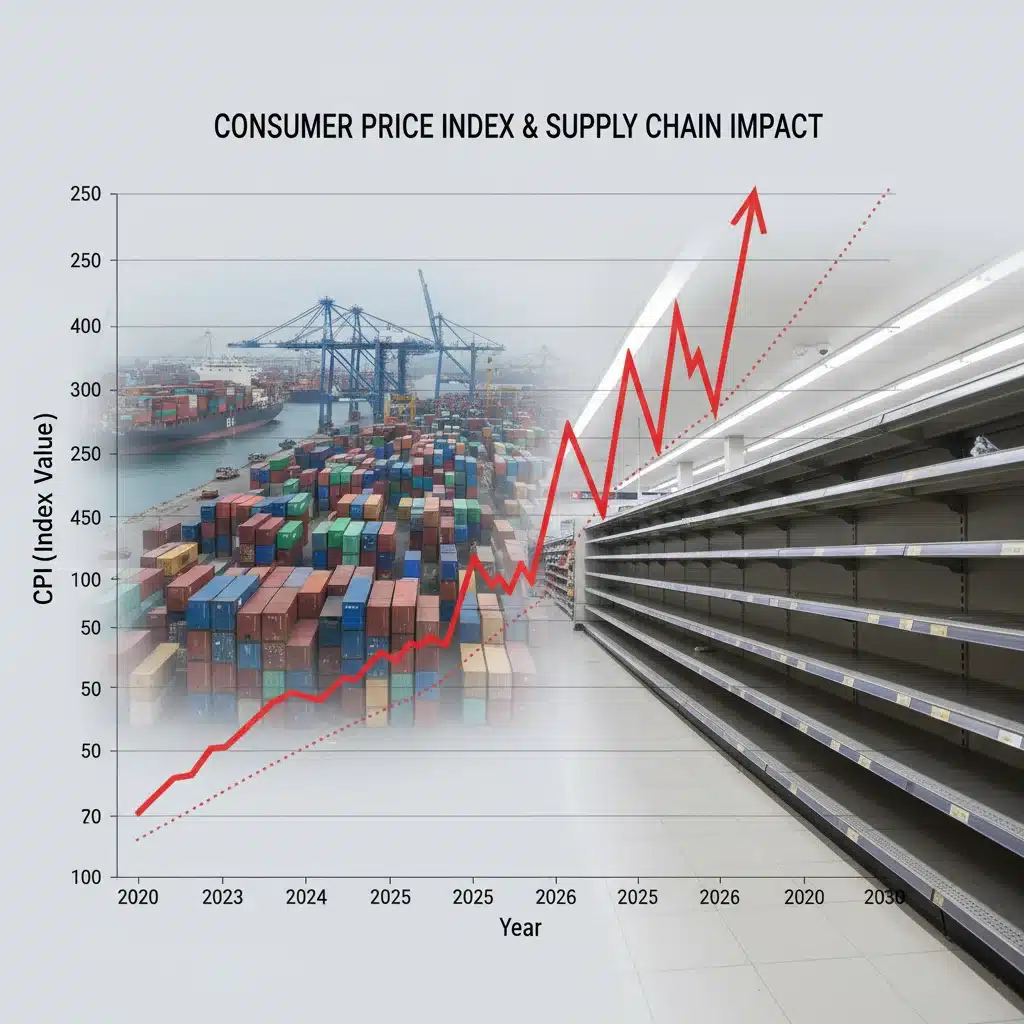
Quantifying the 10-15% Financial Impact on U.S. Consumer Prices
The projection of a 10-15% increase in U.S. consumer prices is not arbitrary. It’s based on historical data from previous major supply shocks and current economic models that factor in the interconnectedness of global trade. For context, the peak inflation during the COVID-19 pandemic saw CPI increase by over 9% year-over-year. A confluence of the aforementioned factors – geopolitical strife, climate events, cyber threats, and labor issues – could create a ‘perfect storm’ that surpasses even that level of inflation.
A 10-15% increase would mean that a basket of goods and services costing $100 today would cost between $110 and $115 in 2026. This might seem manageable on paper, but for average households, it translates into a significant erosion of purchasing power. Essentials like food, housing, and transportation, which often have inelastic demand, would see substantial price hikes, disproportionately affecting lower-income households.
Impact on Household Budgets:
- Food: Agricultural disruptions and transportation costs could make groceries significantly more expensive.
- Energy: Fuel and utility bills would likely surge, impacting commuting costs and heating/cooling expenses.
- Durable Goods: Electronics, appliances, and vehicles, heavily reliant on complex global supply chains, would see notable price increases.
- Housing: While not directly tied to immediate supply chain issues, the cost of construction materials and labor can influence new housing costs and indirectly affect rental markets.
Strategies for Businesses to Mitigate Supply Chain Impact
Businesses, particularly those with extensive global operations, must adopt proactive strategies to build resilience against future supply chain impact:
1. Diversification of Supply Sources
Relying on a single supplier or a single geographic region for critical components is a major vulnerability. Companies should actively seek out and qualify multiple suppliers in different regions to reduce the risk of disruption. This ‘China+1’ or ‘multi-source’ strategy spreads risk and provides alternatives when one source falters.
2. Nearshoring and Reshoring
While often more expensive in the short term, bringing production closer to home (nearshoring) or back to the home country (reshoring) can significantly reduce lead times, transportation costs, and exposure to geopolitical risks. This strategy offers greater control and responsiveness to market changes, lessening the supply chain impact of global events.
3. Strategic Inventory Management
While just-in-time inventory has its merits, a purely lean approach can be disastrous during disruptions. Businesses should consider holding strategic buffer stocks of critical components or finished goods, particularly for items with long lead times or high demand volatility. This requires a careful balance between holding costs and the cost of potential stockouts.
4. Enhanced Supply Chain Visibility and Technology Adoption
Leveraging technologies like AI, machine learning, and blockchain can provide real-time visibility into every stage of the supply chain. This allows companies to identify potential disruptions early, track goods more effectively, and make data-driven decisions to mitigate risks. Predictive analytics can help forecast demand and identify potential bottlenecks before they occur.
5. Robust Risk Management Frameworks
Companies need comprehensive risk management plans that identify potential disruption scenarios, assess their likelihood and impact, and outline clear contingency strategies. This includes financial hedging, insurance, and pre-negotiated agreements with alternative suppliers or logistics providers.

What Can Consumers Do? Navigating the Economic Headwinds
While businesses bear the primary responsibility for strengthening supply chains, consumers are not powerless in the face of potential inflation. Understanding and adapting to the changing economic landscape can help mitigate the personal supply chain impact.
1. Budgeting and Financial Planning
In an inflationary environment, meticulous budgeting becomes even more critical. Consumers should review their spending habits, identify areas where cuts can be made, and prioritize essential expenses. Building an emergency fund becomes paramount to absorb unexpected price increases without resorting to high-interest debt.
2. Smart Shopping and Bulk Buying
Being a savvy shopper can help. This includes comparing prices, utilizing sales and discounts, and considering generic or store-brand alternatives. For non-perishable goods with predictable consumption, bulk buying when prices are favorable can lock in lower costs before potential increases. However, this must be balanced with storage capacity and avoiding waste.
3. Investing in Inflation-Hedge Assets
For those with investment portfolios, considering assets that historically perform well during inflationary periods can be a wise strategy. These might include Treasury Inflation-Protected Securities (TIPS), real estate, commodities, or dividend-paying stocks in resilient sectors. Consulting a financial advisor is recommended to tailor investment strategies to individual risk tolerance and goals.
4. Skill Development and Income Growth
Increasing one’s earning potential is a powerful way to combat inflation. Investing in new skills, pursuing higher education, or negotiating for raises can help ensure that income growth keeps pace with or outstrips rising costs. This proactive approach to personal finance can significantly reduce the negative supply chain impact on household finances.
5. Embracing Local and Sustainable Consumption
Supporting local businesses and producers can reduce reliance on global supply chains, potentially offering more stable prices for certain goods and services. Furthermore, adopting more sustainable consumption habits – repairing instead of replacing, reducing waste, and conserving energy – can also help mitigate the financial strain of rising costs.
The Role of Government and International Cooperation
Governments also have a crucial role to play in addressing potential supply chain impact. This includes:
- Infrastructure Investment: Modernizing ports, roads, railways, and digital networks can improve logistical efficiency and resilience.
- Strategic Stockpiling: Maintaining national reserves of critical goods, such as semiconductors, rare earth minerals, or medical supplies, can buffer against shortages.
- Trade Policy: Engaging in constructive international trade agreements that promote diversification and reduce reliance on single points of failure.
- Cybersecurity Initiatives: Strengthening national cybersecurity defenses and fostering international cooperation to protect critical infrastructure from cyberattacks.
- Climate Resilience: Investing in climate adaptation and mitigation strategies to reduce the impact of extreme weather on supply chains.
International cooperation is paramount. Given the global nature of supply chains, no single country can fully insulate itself from disruptions. Collaborative efforts to monitor risks, share information, and coordinate responses will be essential in managing the complex challenges ahead.
Conclusion: Preparing for an Uncertain Future
The prospect of global supply chain impact leading to a 10-15% increase in U.S. consumer prices by 2026 is a serious one, demanding attention from policymakers, businesses, and individuals alike. While the precise magnitude and timing of future disruptions remain uncertain, the vulnerabilities within the global supply chain are undeniable. Geopolitical tensions, climate change, cyber threats, labor dynamics, and energy volatility are all potent forces capable of creating widespread economic ripple effects.
By understanding these risks and proactively implementing strategies for resilience – from diversifying supply sources and optimizing inventory for businesses, to diligent budgeting and smart consumption for individuals – we can collectively work to mitigate the financial impact. The coming years will test the adaptability of the global economy, but with foresight and strategic planning, the challenges posed by future supply chain disruptions can be navigated, ensuring greater stability and prosperity for all.