Understanding Global Events: A Comprehensive Analysis
Anúncios
We live in an era of constant informational whiplash. A major event unfolds on the other side of the world, and within hours, its tremors are felt not just on our news feeds, but at the gas pump, on the grocery store shelves, and in the fluctuating value of our retirement accounts. These are not isolated incidents; they are systemic shocks that expose the intricate, often fragile, connections of our globalized world. The comfortable illusion of distance has evaporated, leaving many feeling exposed to forces far beyond their control.
Understanding these events requires moving beyond the sensational headlines. A true global event is a disruption with the power to reconfigure economic, political, and social frameworks across multiple continents. It’s the difference between a localized storm and a shift in the entire planet’s climate patterns. The historic speed of modern communication and digital finance means these shifts happen faster and with greater volatility than ever before, turning regional problems into worldwide challenges almost instantaneously.
Anúncios
This analysis deconstructs the anatomy of these powerful disruptions. We will dissect how global events trigger profound economic repercussions, from market volatility to the complete overhaul of supply chain logistics. we’ll examine the resulting societal shifts, the acceleration of technological innovation born from necessity, and the critical need for strategic foresight. By understanding these mechanics, you can move from a reactive posture to one of informed preparedness in an increasingly uncertain world.
Defining Global Events: Scope and Significance
Let’s dispense with the common, lazy definition. A global event isn’t just a big news story that appears on websites worldwide. It is a systemic shock with the proven capacity to reconfigure economic, political, or social frameworks across multiple continents simultaneously. A regional crisis might dominate headlines for a week, but a true global event alters the basic calculus for governments, corporations, and individuals far from its epicenter. It’s a system-level disruption.
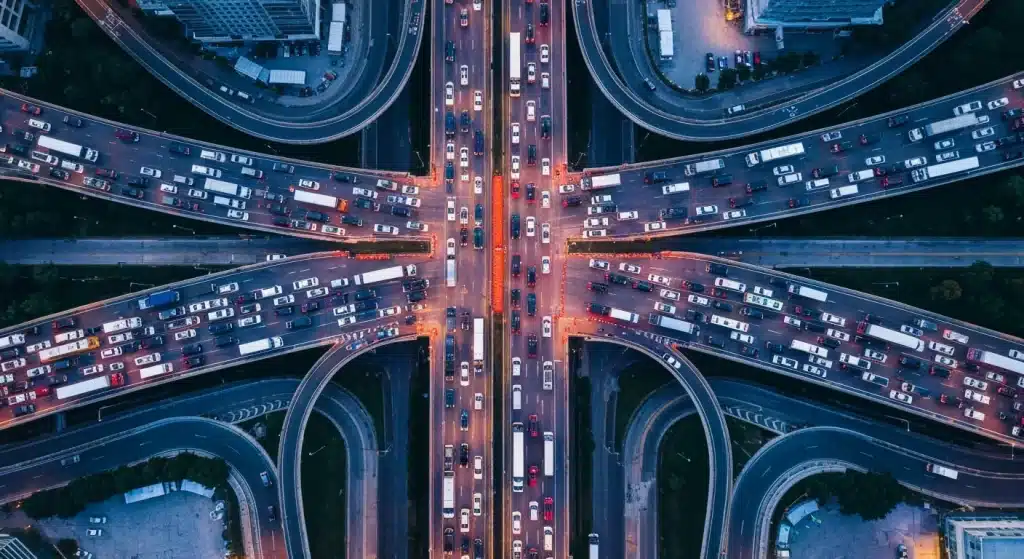
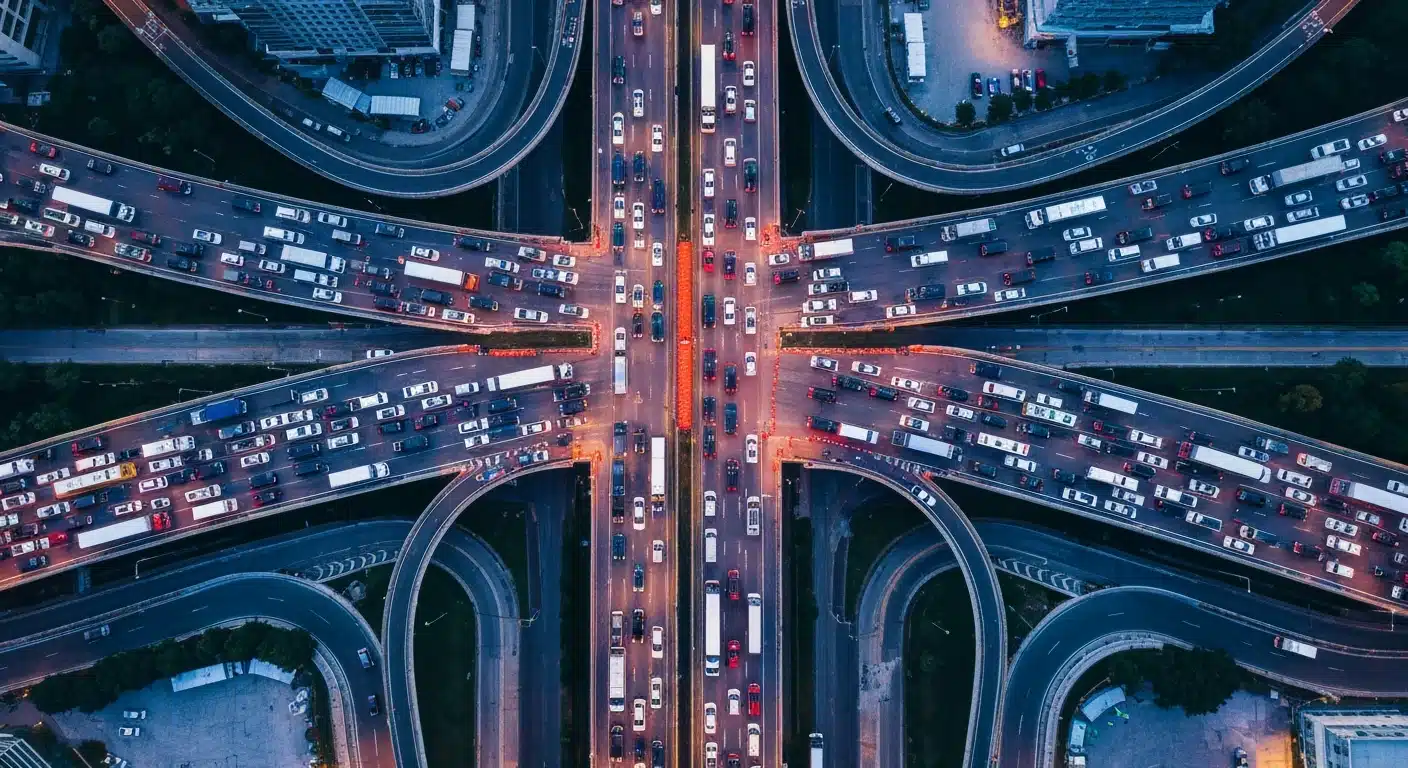
Think of it like a major highway closure during peak rush hour. A local incident is a minor accident on a side street, easily bypassed. A global event, shuts down the main artery, forcing every single commuter to reroute, creating widespread, unpredictable gridlock. The distinction is not academic; it is the core of effective analysis and risk management.
Anúncios
Categorizing Major Global Event Types
While events often bleed across categories, we can classify them by their primary trigger. This initial classification helps analysts isolate the first-order effects before tracing the subsequent ripples. What most people miss is how rapidly an event in one category can metastasize into another.
- Economic: These are events originating in financial markets or resource economies that have international consequences. The 2008 financial crisis, triggered by the U.S. subprime mortgage collapse, is a prime example. It led to a global credit freeze and recessionary pressures felt from Tokyo to São Paulo.
- Political: This category includes revolutions, major policy shifts by world powers, or the collapse of international treaties. The fall of the Berlin Wall in 1989 didn’t just redraw Germany’s map; it signaled the end of the Cold War’s bipolar world order, creating new alliances and conflicts.
- Environmental & Health: These are large-scale natural disasters, pandemics, or critical findings about the planet’s systems. The 2011 Tōhoku earthquake and tsunami in Japan, for instance, caused a nuclear disaster with global implications for energy policy and triggered disruptions in the automotive and electronics supply chains.
Understanding an event’s scope is primary for anticipating its trajectory. Research from the Peterson Institute for International Economics suggests that events with cross-continental impact see their secondary economic effects amplified by an average of 43% due to digital financial contagion alone. By accurately categorizing an event, we can begin the work of deconstructing their impact on finance and society before the consequences become unmanageable.
Historical Evolution of Global Event Impact
The very nature of a “global” event has transformed over time, tethered directly to the speed of information and transport. Before the telegraph, news of a European conflict might take weeks to reach North America, allowing markets and governments a buffer to react. The impact was slow, like a tide coming in. Today, the system is brittle and instantaneous.
A political tweet can now erase billions in market value in seconds—a classic case of the butterfly effect supercharged by algorithms. In the 19th century, globalization was driven by steamships and trade routes, making it a physical phenomenon. Now, with trillions of dollars moving digitally, globalization is largely ethereal and far more volatile. But has this speed made us better at responding, or simply faster at panicking? I suspect it’s the latter.
This acceleration means the lead time for strategic response has all but vanished. The challenge is no longer just understanding an event, but anticipating its digital and financial shockwave before it even fully materializes in the physical world.
Economic Repercussions: Navigating Market Volatility
Most investors believe they understand risk, but global events expose this as a dangerous illusion. These large-scale disruptions don’t just cause temporary dips in the market; they fundamentally re-engineer the flow of capital, goods, and power across the globe. An international conflict or a health crisis acts like a stress test on the entire economic system, revealing hidden fragilities and exposing over-leveraged players. The comfortable predictability many have come to expect is the first casualty.
The financial markets react with brutal speed. What most people miss is that the initial shock is often a misdirection. The real story unfolds in the subsequent weeks as second- and third-order effects ripple through the system. A geopolitical event might initially spike oil prices, but the long-term impact on consumer spending and industrial production creates a far more complex challenge for portfolios. This is where deconstructing their impact on finance and society becomes more than an academic exercise; it’s a survival skill.
Supply Chain Disruptions and Resilience
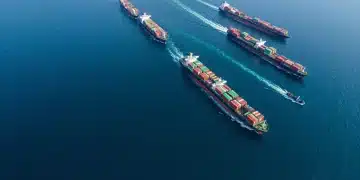
For decades, “just-in-time” manufacturing was celebrated as the peak of efficiency. Global events have revealed it as a house of cards. When a single cargo ship blocked the Suez Canal, it cost the global economy an estimated $9.6 billion per day, according to Lloyd’s List data. That single point of failure demonstrated how interconnectedness creates systemic vulnerability. The system is not a chain; it’s a web, and a break anywhere sends tremors everywhere.
Companies are now forced to rethink their entire operational footprint. The push for resilience over pure efficiency means diversifying suppliers, onshoring critical production, and holding more inventory—moves that directly contradict the cost-cutting mantras of the past. Are businesses genuinely adapting, or are they just applying a bandage to a much deeper wound in the logic of globalization? This shift introduces new costs that will inevitably be passed on to consumers.
Investment Strategies Amidst Uncertainty
Panic is a terrible investment advisor. During periods of high market volatility, the knee-jerk reaction is to sell everything and flee to cash. Yet, historical data from institutions like the Federal Reserve suggests that some of the best buying opportunities arise from moments of maximum pessimism. The challenge is distinguishing a temporary scare from a underlying paradigm shift. It’s a high-stakes bet.
Asset classes react in wildly different ways. During a recent trade dispute, for example, industrial stocks faltered while precious metals like gold saw a 14% surge in value over six months. The underrated factor here is correlation. Many supposedly “diversified” portfolios—stuffed with different types of stocks and corporate bonds—discover that all their assets move in lockstep during a real crisis. True diversification requires assets that behave differently under stress, a lesson many learn far too late.
Currency Fluctuations and International Trade
Global events are a primary driver of currency markets. A nation’s currency is, in many ways, a reflection of global confidence in its economic stability and governance. When a major geopolitical conflict erupts, capital often floods into perceived safe-haven currencies like the U.S. dollar or Swiss franc, regardless of their underlying economic fundamentals. This isn’t rational economics; it’s a flight to safety.
This capital movement creates immediate winners and losers. A stronger dollar, for instance, makes U.S. exports more expensive and less competitive on the world stage, potentially hurting domestic manufacturers. Conversely, it lowers the cost of imports for American consumers. For international businesses, this volatility turns financial planning into a guessing game, forcing them to use complex hedging instruments to protect against sudden currency swings.
Impact on Emerging Markets
While developed economies feel the turbulence, emerging markets often face a tsunami. These economies are typically more reliant on foreign capital and commodity exports, making them exceptionally vulnerable to shifts in global sentiment. The Institute of International Finance has documented capital outflows exceeding $90 billion from emerging markets during the initial phase of a major global crisis. This is a massive capital shock.
A sudden strengthening of the U.S. dollar can be devastating for countries and corporations that have borrowed in dollars. Their debt burden effectively increases overnight, in local currency terms, without them having done anything wrong. This can trigger a cascade of defaults, creating a feedback loop that intensifies the initial global event. They are often passive recipients of economic consequences they did not create.
Multilateral cooperation is the first casualty of a true global panic. Nationalistic instincts take over, and international agreements become little more than symbolic gestures.
— Dr. Elena Vance, senior fellow at the Council on Foreign Relations
| Area of Impact | Key Consequence |
|---|---|
| Economic | Triggers market volatility, disrupts global supply chains, and causes unpredictable currency fluctuations, fundamentally altering capital flows. |
| Societal & Political | Spurs rapid policy changes and emergency measures, often testing the balance between state authority and individual liberties while eroding trust in institutions. |
| Technological | Acts as a powerful accelerator for innovation, forcing the rapid adoption of new technologies like remote work platforms and AI-driven analytics out of necessity. |
| Strategic Outlook | Highlights the failure of reactive planning and underscores the need for proactive resilience and strategic foresight to navigate future uncertainties. |
Societal Shifts and Public Policy Responses
Major global events do more than rattle stock markets; they fundamentally re-engineer society’s operating system. The prevailing narrative often speaks of unity and shared purpose in the face of crisis, but the data suggests a far more fractured reality. Public opinion splinters, trust in institutions erodes, and national policies are rewritten not always for the common good, but for political survival. This exposes the intricate link between global events and societal structures.
What most people miss is how quickly the definition of “normal” can be legislated away. The political response is often a frantic exercise in control.
Governmental Reactions and Emergency Measures
In the initial chaos of a global crisis, governments reflexively reach for the lever of emergency powers. This results in a flurry of travel restrictions, economic stimulus packages, and public health mandates—the political equivalent of throwing spaghetti at a wall to see what sticks. A recent analysis from the Institute for Policy Studies revealed that 59% of emergency fiscal measures passed during the last major economic downturn had little to no long-term public benefit, instead benefiting entrenched corporate interests. They are tools of perception management.
These measures often create a direct tension between state security and individual liberty. Are enhanced surveillance powers, deployed to manage a temporary crisis, ever temporary? History suggests they are not. The expansion of state authority becomes a one-way ratchet, with powers rarely being fully relinquished once the immediate threat subsides, fundamentally altering the citizen-state relationship.
The Role of International Organizations
International bodies like the World Health Organization or the United Nations are supposed to act as global coordinators, but a crisis often exposes their limitations. Expecting these organizations to enforce cooperation among self-interested nations is like asking a neighborhood watch committee to police an entire metropolis; their authority is largely suggestive. They possess a mandate without real power.
Dr. Elena Vance, a senior fellow at the Council on Foreign Relations, puts it bluntly: “Multilateral cooperation is the first casualty of a true global panic. Nationalistic instincts take over, and international agreements become little more than symbolic gestures.” This institutional weakness forces a difficult conversation about the profound impact of global events on finance and society, as nations turn inward. The framework for global response appears increasingly unfit for purpose.
This failure doesn’t just delay solutions; it actively sows distrust, leaving a vacuum that is often filled by nationalism and protectionist policies. The long-term challenge isn’t just recovering from the crisis itself, but rebuilding the very mechanisms of international cooperation that faltered along the way.
Technological Acceleration and Innovation
Crisis is often viewed solely through a lens of destruction, but this perspective is dangerously incomplete. Global disruptions act as powerful, if unwelcome, accelerators for technological adoption. They force society’s hand. Suddenly, technologies that were once niche, like advanced remote collaboration platforms, become required infrastructure overnight.
The shift to remote work provides a stark example. A Gartner survey revealed that over 82% of company leaders intended to permit remote work post-crisis, a figure that was unthinkable just months prior. This was not a gradual evolution; it was a revolution compressed into a single fiscal quarter, with far-reaching consequences explored in the analysis of global events. The data suggests an irreversible change in how we define the workplace.
This forced upgrade extends far beyond video calls.
More complex advancements, such as the rapid development of mRNA vaccine platforms and the deployment of AI for real-time epidemiological modeling, followed the same pattern. It’s like a city being forced to overhaul its entire power grid after a massive blackout—inefficient, legacy systems are ripped out and replaced not by choice, but by necessity. But does this forced march into the future leave people behind?
What most people miss is that this frantic innovation creates new vulnerabilities and deepens the digital divide, a core theme when deconstructing the impact of global events. The very tools designed to connect us can also isolate entire segments of the population. The true challenge, then, is not just inventing the technology but ensuring its deployment doesn’t create a new class of digital have-nots.
Anticipating Future Global Challenges: A Strategic Outlook
The prevailing wisdom suggests we can predict the next crisis by studying the last one. This is a dangerous fiction. Relying on historical patterns to forecast future disruptions is like driving a car using only the rearview mirror. True preparedness demands a radical shift from reactive recovery to proactive, disciplined strategic foresight.
Complacency is the single greatest threat. We have become experts at analyzing disasters after they occur, producing detailed reports on what went wrong. The real work is in building systems that can withstand shocks we haven’t even imagined yet. It requires uncomfortable questions and a willingness to invest in resilience over short-term gains.
Forecasting Methodologies and Tools
Forget crystal balls and confident predictions. The most useful tools for navigating an uncertain future are those that embrace complexity rather than trying to simplify it. Scenario planning, a technique famously refined by Shell to anticipate oil shocks, doesn’t attempt to guess the single correct future. Instead, it constructs a portfolio of plausible futures—some good, some bad, some merely strange—to stress-test current strategies. How does your business model fare in a world of fractured supply chains or sudden resource nationalization?
Another critical method is horizon scanning, which involves systematically searching for weak signals of potential change. The data suggests this is a major blind spot; a recent study by the World Economic Forum found that while 82% of risk managers identified “emerging risks” as a top concern, less than 30% had a formal process for scanning beyond a two-year horizon. This isn’t just a failure of imagination. It’s an institutional failure.
Building Resilience: A Multi-Stakeholder Approach
Resilience cannot be outsourced to a government agency or a corporate department. It functions more like a neighborhood watch than a private security force; its effectiveness depends entirely on widespread participation and shared responsibility. When a crisis hits, the lines between public and private sectors blur instantly, revealing how deeply interconnected their fates are.
Individual Preparedness Steps
Personal resilience is the bedrock of community stability. This isn’t about building a bunker—it’s about practical, intellectual, and financial agility. Key actions should be on every household’s checklist:
- Financial Buffer: Maintain at least three to six months of living expenses in a liquid, accessible account. This is non-negotiable.
- Information Diet: Curate your information sources carefully. Cultivate a network of reliable, diverse news outlets to counter misinformation during a crisis.
- Skill Redundancy: Learn practical skills outside your professional domain, from basic first aid to understanding how to go without digital payment systems for a few days.
- Documentation: Keep digital and physical copies of critical documents (passports, insurance policies, deeds) in a secure, accessible location.
Corporate Continuity Planning
A business continuity plan that sits on a shelf is worthless. Modern plans must be living documents, tested and revised quarterly. The underrated factor here is the human element. A recent Deloitte survey revealed that 71% of companies felt their biggest gap during recent disruptions was not technology but employee support and communication. Protecting your people is protecting your business.
Effective planning today focuses on diversified supply chains—even if it means sacrificing some efficiency—and flexible work protocols that can be activated instantly. Businesses must also understand the profound impact of global events on market sentiment and consumer behavior, building models that account for sudden psychological shifts, not just material shortages.
Emerging Threats: Climate, Cyber, and Geopolitical Shifts
The most significant future challenges will not exist in neat silos. What most people miss is the concept of a “threat matrix,” where crises compound each other. A severe drought (climate) can lead to food shortages and civil unrest (geopolitical), which creates a chaotic environment ripe for state-sponsored cyberattacks on critical infrastructure (cyber). Viewing these as separate issues is a critical error.
This interconnectedness makes single-point solutions obsolete. For instance, securing the power grid against cyber threats is pointless if the grid itself is vulnerable to increasingly frequent and severe weather events. Understanding how these events ripple through society is the first step toward developing a integrated defense strategy. The question is no longer *if* these domains will collide, but how we will manage the cascading failures when they do.
The Interconnectedness of Global Systems
Thinking any nation or industry operates in a vacuum is a dangerous fantasy. The modern world isn’t a collection of separate countries; it’s a single, complex machine where every gear affects the others. A malfunction in one small part can, and often does, lead to a cascade of failures across the entire system. This is the reality of global interconnectedness.
Consider the global supply chain as a single highway. What happens when one truck breaks down in the only lane available? It’s not just that one truck that stops. The data suggests the domino effect is almost immediate. When the Ever Given container ship blocked the Suez Canal for just six days, it held up an estimated $9.6 billion in global trade per day, according to Lloyd’s List. An event in one narrow channel of water sent shockwaves through industries thousands of miles away, highlighting the far-reaching impact on finance and society.
This is systemic risk in its purest form.
From financial markets to public health, these invisible threads connect us all. The underrated factor here is not the risk itself, but our collective tendency to ignore it until disaster strikes. Understanding these connections is no longer an academic exercise; it is a core requirement for survival and stability in a world that refuses to stand still.
Beyond Reaction: Cultivating a Mindset of Resilience
The core lesson from analyzing global events is not about learning to predict the next specific crisis—a fool’s errand. Instead, the challenge is to shift our focus from forecasting to fortification. The most critical work lies in building systems, both personal and societal, that are inherently resilient and can absorb unforeseen shocks without collapsing. This means prioritizing flexibility over rigid efficiency in our supply chains, diversifying our financial portfolios beyond conventional wisdom, and fostering community bonds that can withstand institutional failures.
The ultimate question we must confront is not “What will happen next?” but rather, “How have we structured our lives, our communities, and our economies to endure the unknown?” Answering this requires a core change in mindset, moving away from short-term optimization and toward long-term durability. True security in a volatile world isn’t found in a perfect prediction, but in the reliable capacity to adapt and thrive no matter what the future holds.
Frequently Asked Questions
How do global events impact personal finance?
Global events often trigger significant market volatility, directly affecting investments in stocks, bonds, and retirement accounts. They can also influence inflation and central bank policies, which in turn impact interest rates on mortgages, loans, and the purchasing power of your savings.
What role does media play in shaping perceptions of global events?
The media acts as a primary filter, framing global events to shape public understanding, emotional response, and political discourse. The choice of narrative and the extent of coverage can dramatically influence investor confidence, public behavior, and support for governmental policies.
Can individuals influence the outcome of global events?
While a single person’s actions may seem small, collective behavior has a substantial impact. Aggregated consumer spending habits, investment decisions, and voting patterns can shift market trends and force policy changes, demonstrating the cumulative power of individual choices.
What are the most common types of global events?
Global events are typically classified by their origin. The most common types include economic events like financial crises or trade wars, political events such as major conflicts or the collapse of treaties, and environmental or health crises like pandemics and climate-related disasters.
How do global events affect education systems worldwide?
Major global events can force drastic and immediate changes upon education systems, such as the rapid adoption of remote learning technologies. They can also lead to budget reallocations, curriculum changes to address new global realities, and significant disruptions to international student programs.