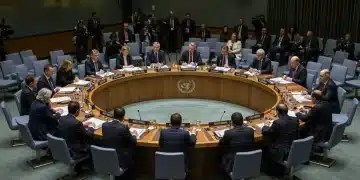
2025 Geopolitical Landscape: US Strategic Interests
Anúncios
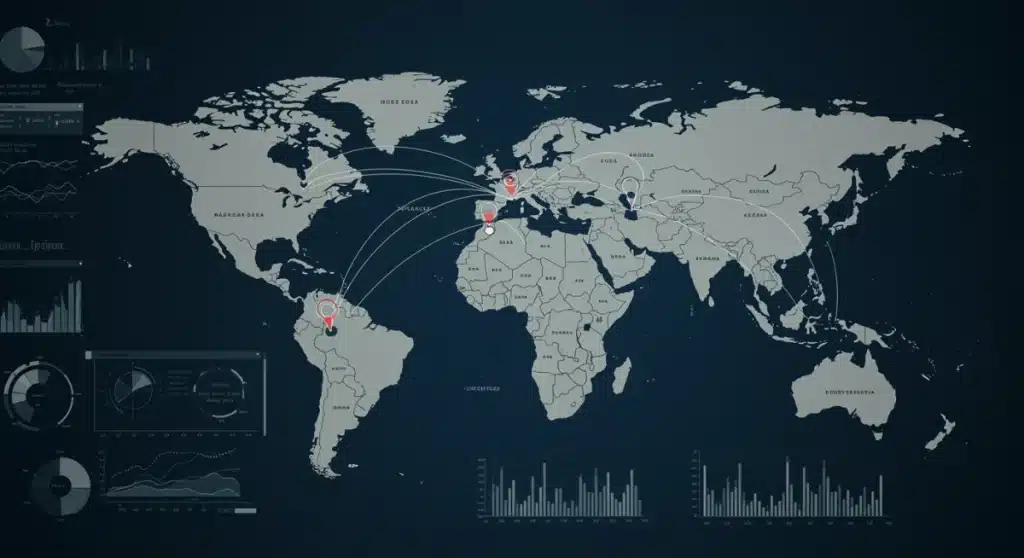
The 2025 geopolitical landscape mandates a close examination of key regions, as their evolving dynamics directly impact US strategic interests, shaping global stability and international policy.
Anúncios
As we approach 2025, the global stage continues its rapid transformation, presenting both opportunities and complex challenges for the United States. Navigating this intricate web of international relations demands a clear-eyed assessment of key regions. Understanding the 2025 Geopolitical Landscape, particularly the seven regions outlined here, is not merely an academic exercise; it is fundamental to safeguarding US interests and promoting global stability.
The evolving Indo-Pacific and US strategic positioning
The Indo-Pacific region remains central to US strategic interests, driven by its economic dynamism and the rising influence of China. This vast area, stretching from the Indian Ocean to the Pacific, is a critical theater for trade, security, and technological competition.
Anúncios
The United States seeks to maintain a free and open Indo-Pacific, promoting adherence to international law, especially in maritime domains. This involves strengthening alliances and partnerships, as well as addressing potential flashpoints that could destabilize the region.
Key alliances and partnerships
US foreign policy in the Indo-Pacific relies heavily on a network of robust alliances and partnerships. These relationships are vital for collective security and economic prosperity.
- Australia and Japan: Long-standing allies offering critical support in regional security initiatives.
- South Korea: A key partner in managing regional stability, particularly regarding North Korea.
- QUAD (Quadrilateral Security Dialogue): A strategic forum involving the US, Australia, Japan, and India, focused on maritime security and regional resilience.
Challenges in the South China Sea
The South China Sea represents a significant point of contention. China’s assertive territorial claims and militarization of artificial islands pose direct challenges to freedom of navigation and international norms. The US maintains a consistent presence, conducting freedom of navigation operations to uphold international law.
Regional nations like Vietnam, the Philippines, and Malaysia also have competing claims, further complicating the maritime security environment. Diplomatic efforts are ongoing to de-escalate tensions and find peaceful resolutions, though progress remains slow.
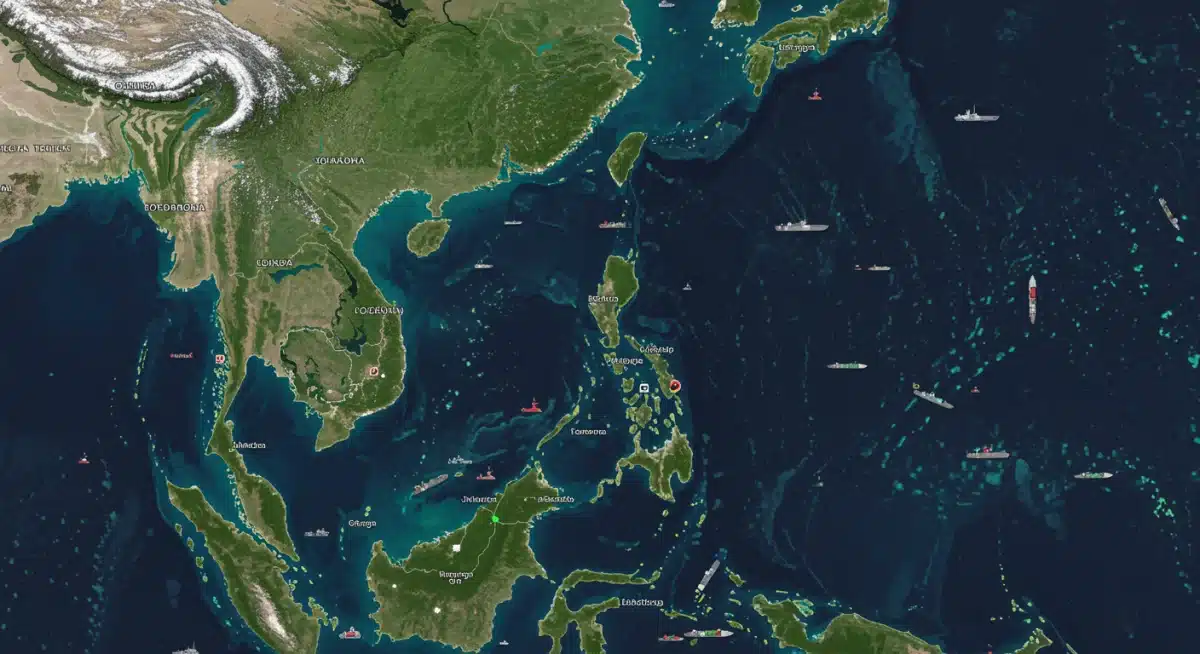
The Indo-Pacific will undoubtedly remain a top priority for US foreign policy in 2025, requiring sustained engagement and adaptive strategies to manage competition and foster cooperation.
Europe’s continued security challenges and NATO’s role
Europe continues to face a complex security environment, primarily shaped by ongoing tensions with Russia and the conflict in Ukraine. The North Atlantic Treaty Organization (NATO) remains the cornerstone of collective defense, adapting to new threats and reaffirming its commitment to mutual security.
US engagement in Europe is crucial for transatlantic stability, ensuring that democratic values and international norms are upheld against revisionist powers. The reinforcement of NATO’s eastern flank and support for Ukraine are paramount.
The impact of the Ukraine conflict
The war in Ukraine has profoundly reshaped European security dynamics, leading to a renewed sense of purpose within NATO and increased defense spending across member states. The US provides substantial military and financial aid to Ukraine, aiming to bolster its defense capabilities and deter further Russian aggression.
This conflict has also highlighted the importance of energy security and the need for Europe to diversify its energy sources away from Russia. Sanctions and diplomatic pressure continue to be key tools in the US and European response.
Strengthening NATO’s eastern flank
In response to perceived threats from Russia, NATO has significantly enhanced its presence along its eastern flank. This includes deploying additional troops, equipment, and conducting more frequent military exercises. These measures are designed to act as a deterrent and reassure frontline states.
- Enhanced Forward Presence: Multinational battlegroups deployed in the Baltic states and Poland.
- Increased Air Policing: Greater surveillance and interception capabilities over European airspace.
- Cyber Defense: Strengthening collective defenses against state-sponsored cyberattacks.
The future of European security relies on sustained US leadership and a unified transatlantic approach to counter evolving threats, particularly from Russia, and to support democratic transitions in neighboring regions.
The Middle East: Navigating regional rivalries and stability
The Middle East remains a volatile yet strategically vital region for the United States, characterized by intricate regional rivalries, ongoing conflicts, and the persistent threat of terrorism. US interests include ensuring the free flow of oil, preventing nuclear proliferation, and combating extremist ideologies.
The approach to the Middle East in 2025 will likely involve a delicate balance of diplomatic engagement, security cooperation, and strategic deterrence, without necessarily seeking to dominate every aspect of regional politics.
Iran’s nuclear ambitions and regional influence
Iran’s nuclear program continues to be a primary concern for the US and its allies. Efforts to prevent Iran from acquiring nuclear weapons remain a high priority, alongside addressing its destabilizing activities in the region, such as support for proxy groups.
Diplomatic pathways, coupled with sanctions, are employed to manage this challenge. The US also works closely with partners like Israel and Saudi Arabia to counter Iranian influence and promote regional stability.
Emerging security partnerships
Despite persistent challenges, new security architectures are emerging in the Middle East. The Abraham Accords, which normalized relations between Israel and several Arab nations, represent a significant shift, creating new opportunities for cooperation against shared threats.
- Israel-UAE-Bahrain Cooperation: Enhanced intelligence sharing and economic ties.
- Saudi Arabia’s Vision 2030: A broad reform agenda impacting regional economic and political dynamics.
- Counter-terrorism efforts: Continued collaboration with regional partners to degrade terrorist organizations.
Maintaining a nuanced and adaptable strategy in the Middle East is essential for the US to protect its interests while avoiding deeper entanglement in intractable conflicts.
Africa’s growing strategic importance and geopolitical competition
Africa’s strategic importance is rapidly increasing, driven by its vast natural resources, burgeoning youth population, and growing geopolitical competition. The US views Africa as a continent of immense potential, but also one facing significant development, governance, and security challenges.
US engagement in Africa focuses on promoting sustainable economic growth, strengthening democratic institutions, and countering extremist groups, while also responding to the expanding influence of rival powers like China and Russia.
Resource competition and foreign influence
Africa is rich in critical minerals essential for global industries, including those vital for renewable energy and advanced technologies. This has led to intensified competition among global powers for access to these resources.
China, through its Belt and Road Initiative, has invested heavily in African infrastructure, while Russia has expanded its security and military presence in several nations. The US aims to offer an alternative model of partnership, emphasizing transparency, good governance, and mutual benefit.
Security challenges and regional stability
Many parts of Africa grapple with complex security challenges, including the rise of extremist groups like Boko Haram and Al-Shabaab, and ongoing internal conflicts. These issues threaten regional stability and create humanitarian crises.
- Counter-terrorism initiatives: Training and equipping local forces to combat extremist threats.
- Peacekeeping support: Contributing to international efforts to stabilize conflict zones.
- Governance and development aid: Supporting programs that foster democracy, health, and education.
For 2025, a robust and balanced US strategy in Africa will be critical to fostering stability, promoting sustainable development, and ensuring that the continent remains a partner in addressing global challenges.
Latin America: Addressing migration, economic ties, and democratic resilience
Latin America holds direct relevance to US national security and economic prosperity, particularly concerning issues of migration, trade, and democratic governance. The proximity of the region makes its stability and development intrinsically linked to US domestic well-being.
US policy in Latin America aims to foster economic growth, strengthen democratic institutions, combat transnational crime, and manage migration flows in a humane and orderly manner.
Migration challenges and border security
The issue of irregular migration from Central and South America to the US border remains a significant challenge. Factors such as economic hardship, political instability, and violence in countries of origin contribute to these migratory patterns.
The US seeks to address the root causes of migration through development aid and support for governance reforms in partner nations, alongside enhancing border security measures and processing capabilities.
Economic partnerships and trade relations
Economic ties with Latin American countries are substantial, with significant trade flows and investments. Strengthening these economic partnerships is vital for mutual prosperity and regional integration.
- Free Trade Agreements: NAFTA’s successor, USMCA, and other agreements underpin economic exchange.
- Investment in infrastructure: Promoting private sector investment to boost regional economies.
- Energy cooperation: Collaborating on energy security and sustainable development initiatives.
In 2025, a comprehensive US approach to Latin America will emphasize shared responsibility, collaborative solutions, and a focus on long-term stability and prosperity for the entire hemisphere.
The Arctic: A new frontier for strategic competition
The Arctic region is rapidly emerging as a new frontier for strategic competition, driven by climate change opening up new shipping routes and access to vast natural resources. Its geopolitical significance is accelerating, attracting increased attention from global powers, including the US.
US interests in the Arctic include ensuring freedom of navigation, protecting environmental integrity, and maintaining stability in a region that could become a flashpoint for international rivalry.
Opening of new shipping routes
As Arctic ice recedes, new shipping routes like the Northern Sea Route become more accessible, potentially significantly reducing transit times between Asia and Europe. This has profound implications for global trade and logistics.
The US, while not having extensive Arctic coastline compared to Russia or Canada, is keen to ensure that these routes remain open and are governed by international law, rather than unilateral claims.
Resource extraction and environmental concerns
The Arctic is believed to hold substantial untapped reserves of oil, natural gas, and minerals. The prospect of resource extraction presents both economic opportunities and significant environmental challenges, given the region’s fragile ecosystem.
- Sustainable development: Balancing economic interests with environmental protection.
- Scientific research: Understanding the impacts of climate change and informing policy.
- Indigenous rights: Protecting the cultures and livelihoods of Arctic indigenous communities.
The US strategy for the Arctic in 2025 will need to balance economic and security interests with a strong commitment to environmental stewardship and international cooperation to prevent militarization.
Cyber warfare and space: The new domains of strategic advantage
Beyond traditional geographical regions, cyber warfare and outer space have become critical domains for strategic advantage, profoundly shaping the 2025 Geopolitical Landscape. These arenas present novel challenges and opportunities for US national security and global influence.
The US prioritizes developing robust cyber defenses, maintaining superiority in space, and establishing international norms to prevent conflicts in these increasingly vital domains.
Cyber threats and national security
State-sponsored cyberattacks, ransomware, and disinformation campaigns pose persistent threats to critical infrastructure, economic stability, and democratic processes. Protecting against these sophisticated attacks is a top national security priority.
The US invests heavily in cybersecurity capabilities, both defensive and offensive, and works with allies to share intelligence and coordinate responses to cyber threats. The attribution of attacks and holding perpetrators accountable remain complex challenges.
Space as a contested domain
Outer space, once considered a sanctuary for scientific exploration, is now a contested domain. The reliance on satellites for communication, navigation, intelligence, and military operations makes space assets critical infrastructure.
- Anti-satellite weapons: Development by rival powers to disrupt or destroy space capabilities.
- Space debris: A growing threat to operational satellites from past launches and collisions.
- Commercialization of space: Increasing private sector involvement in space activities, requiring new regulatory frameworks.
In 2025, safeguarding US interests in cyber and space domains will require continuous innovation, strong international partnerships, and proactive diplomacy to establish responsible behaviors and prevent escalation.
| Region | US Strategic Interest |
|---|---|
| Indo-Pacific | Maintaining free and open trade, countering China’s influence, strengthening alliances. |
| Europe | NATO cohesion, countering Russian aggression, supporting Ukraine. |
| Middle East | Preventing nuclear proliferation, combating terrorism, ensuring energy security. |
| Africa | Promoting development, countering extremism, managing resource competition. |
Frequently asked questions about the 2025 Geopolitical Landscape
The Indo-Pacific is crucial due to its economic significance, vast trade routes, and the rising influence of China. Maintaining a free and open region is vital for global commerce, democratic values, and regional stability, directly impacting US prosperity and security.
The Ukraine conflict elevates US strategic interests in Europe by reinforcing NATO’s role and highlighting the threat of Russian aggression. It necessitates continued US support for European allies and Ukraine to uphold international norms and prevent further destabilization.
Primary US concerns in the Middle East include preventing nuclear proliferation, combating terrorism, and ensuring energy security. Navigating complex regional rivalries and supporting stability through diplomacy and security partnerships remain key objectives for US policy.
Africa’s growing strategic importance stems from its rich natural resources, young population, and increasing geopolitical competition from other global powers. The US aims to foster sustainable growth, democratic governance, and counter extremism while offering an alternative to rival influences.
Cyber warfare and space are critical domains for strategic advantage, influencing national security and global power dynamics. The US prioritizes robust cyber defenses, maintaining space superiority, and establishing international norms to prevent conflicts in these new, contested frontiers.
Conclusion
The 2025 Geopolitical Landscape is characterized by a dynamic interplay of regional specificities and global interconnectedness. From the economic powerhouse of the Indo-Pacific to the emerging strategic significance of the Arctic, each region presents unique challenges and opportunities for US foreign policy. Effectively managing these diverse interests requires a comprehensive, adaptable, and collaborative approach. The United States must continue to strengthen alliances, invest in diplomatic solutions, and maintain a robust defense posture across all domains—traditional and emerging—to secure its strategic objectives and contribute to a more stable and prosperous global order. The insights gained from closely monitoring these seven key regions will be instrumental in shaping effective strategies for the years ahead.