US Space Policy 2025: Global Regulations & Exploration

Anúncios
In 2025, the United States is poised to shape international space policy through a blend of national security interests, commercial innovation, and multilateral diplomacy, addressing emerging global regulations and ambitious exploration goals.
Anúncios
The cosmos, once a distant realm of scientific curiosity, has rapidly transformed into a critical domain for national security, economic prosperity, and technological advancement. As we approach 2025, the landscape of international space policy in 2025: the US stance on new global regulations and exploration is undergoing significant shifts, driven by a surge in commercial activity, geopolitical competition, and the urgent need for sustainable practices. This article delves into the intricate position the United States is taking, examining its approaches to new global regulations and its visionary exploration endeavors, aiming to provide a comprehensive understanding of this evolving frontier.
The evolving landscape of space governance
The space domain is no longer the exclusive purview of a few state actors. The proliferation of private companies, the miniaturization of satellites, and the increasing accessibility of space technologies have introduced complexities that necessitate a re-evaluation of existing international frameworks. The United States finds itself at a pivotal juncture, seeking to balance its leadership aspirations with the imperative for global cooperation.
Anúncios
The current international legal regime for space, largely based on the 1967 Outer Space Treaty, struggles to address contemporary challenges such as mega-constellations, space debris, and resource utilization. Nations are grappling with how to adapt these foundational principles to a rapidly evolving operational environment.
Challenges in international space law
The existing legal framework, while foundational, presents several gaps when confronted with modern space activities. These challenges extend beyond traditional state-centric concerns to encompass a burgeoning commercial sector.
- Lack of clear definitions for space resource ownership and utilization.
- Inadequate mechanisms for addressing orbital debris creation and mitigation.
- Ambiguity regarding the jurisdiction and liability for private space activities.
- Absence of universally accepted norms for responsible behavior in space.
The US approach acknowledges these shortcomings, advocating for pragmatic solutions that foster innovation while ensuring long-term sustainability. This involves a delicate dance between promoting American commercial interests and contributing to a stable, predictable international operating environment. The discussions around a new global framework are intense, reflecting diverse national interests and technological capabilities.
US strategy: balancing national interests and global cooperation
The United States’ approach to international space policy in 2025 is fundamentally shaped by its dual commitment to national security and global leadership. This involves advocating for frameworks that protect its assets, promote its values, and facilitate its ambitious exploration agenda, all while engaging with international partners.
Washington’s strategy recognizes that no single nation can effectively govern the vastness of space alone. Therefore, it seeks to forge consensus on key issues, leveraging its technological prowess and diplomatic influence to steer discussions towards outcomes that align with its long-term vision for space.
Key pillars of US space policy
The US strategy is built upon several core principles that guide its engagement in international forums and its bilateral relationships. These pillars are designed to ensure a robust and responsible presence in space.
- Promoting a rules-based order to ensure stability and predictability.
- Advancing commercial space activities through supportive regulatory environments.
- Enhancing space situational awareness and space traffic management.
- Investing in scientific research and exploration for the benefit of humanity.
These pillars underscore a proactive stance, where the US aims to be a thought leader in shaping the future of space governance rather than merely reacting to developments. The emphasis is on developing flexible and adaptable regulations that can keep pace with rapid technological advancements and evolving operational needs.
The Artemis Accords: A US-led initiative for lunar exploration
A cornerstone of the US exploration strategy and its stance on new global regulations is the Artemis Accords. Launched in 2020, this set of non-binding principles aims to establish a common vision for the safe and sustainable exploration of the Moon, Mars, and beyond. It represents a significant effort by the US to shape future space activities through multilateral agreements.
The Accords are built upon the foundation of the Outer Space Treaty but provide more specific guidance on issues such as peaceful exploration, interoperability, emergency assistance, registration of space objects, release of scientific data, protecting heritage sites, space resources, deconfliction of activities, and orbital debris mitigation. By 2025, the number of signatory nations is expected to grow, solidifying its influence.
Impact and reception of the Artemis Accords
The Artemis Accords have been met with both enthusiasm and skepticism. Proponents view them as a necessary step towards establishing clear guidelines for lunar and deep-space activities, preventing potential conflicts, and fostering collaboration. The Accords offer a framework for responsible behavior, crucial as more nations and private entities set their sights on the Moon.
However, some nations and analysts have expressed concerns that the Accords might create a parallel legal regime, potentially undermining the universality of the Outer Space Treaty. Critics also point to the initial exclusion of some major spacefaring nations, raising questions about its truly global nature. Despite these debates, the Accords undeniably represent a significant American effort to define the norms of future space exploration.
The US sees the Artemis Accords as a living document, open to evolution and expansion as more partners join and as the challenges of space exploration become clearer. This adaptability is key to its long-term relevance and effectiveness in shaping international space policy in 2025 and beyond.
Addressing the challenge of space debris and traffic management
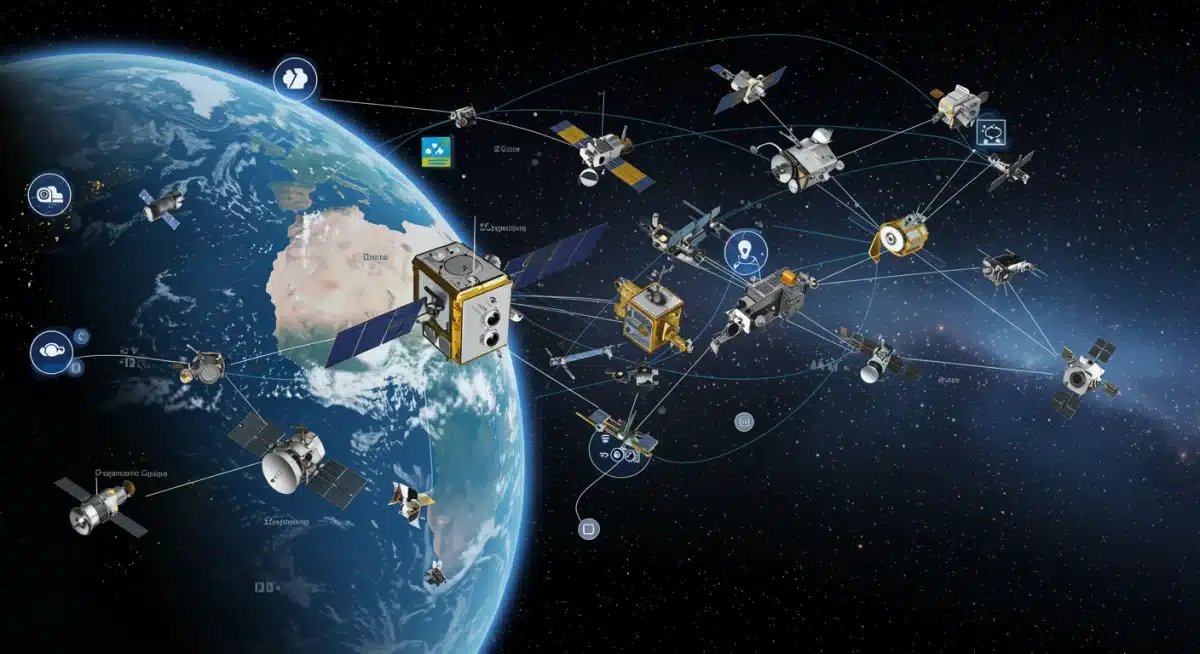
One of the most pressing concerns in international space policy in 2025 is the escalating problem of space debris and the need for robust space traffic management (STM). The sheer volume of objects in orbit, from defunct satellites to rocket stages and fragmentation debris, poses a significant threat to operational spacecraft and future missions.
The US, with its extensive satellite infrastructure and long history in space, is deeply invested in finding solutions to this challenge. Its approach involves a combination of technological innovation, international collaboration, and the development of best practices to mitigate the creation of new debris and facilitate the removal of existing hazards.
US initiatives for space safety
The United States is actively pursuing several avenues to enhance space safety and address the debris problem. These efforts range from domestic policy directives to multilateral engagements aimed at fostering a safer orbital environment.
- Development of advanced space situational awareness (SSA) capabilities.
- Promotion of satellite design standards for debris mitigation.
- Investment in active debris removal (ADR) technologies.
- Advocacy for international guidelines on orbital debris reduction.
These initiatives are not just about protecting US assets; they reflect a broader understanding that space is a shared resource, and its long-term sustainability depends on collective action. The US is pushing for greater data sharing and transparency among all space actors to improve collision avoidance and enhance overall orbital safety. This collaborative stance is vital for the future of space activities.
Commercial space and its influence on US policy
The rapid growth of the commercial space sector has profoundly impacted international space policy in 2025. Private companies are now launching more satellites, developing new launch vehicles, and even planning missions to the Moon and Mars, often outpacing traditional government-led initiatives.
The US government views the commercial sector as a vital engine for innovation and economic growth, actively seeking to foster its development while also ensuring proper oversight. This involves creating regulatory environments that encourage investment and entrepreneurship while safeguarding national interests and international obligations.
Government support and regulatory frameworks
The US government supports its commercial space industry through various mechanisms, from procurement contracts to research and development funding. However, with this support comes the responsibility of developing appropriate regulatory frameworks that address the unique challenges posed by private space activities.
- Streamlining licensing processes for commercial launches and operations.
- Developing guidelines for satellite mega-constellations to minimize interference.
- Addressing liability issues for private sector space activities.
- Promoting fair competition and preventing monopolistic practices.
The interaction between government and industry is dynamic, with policy often evolving in response to technological advancements and market demands. The US aims to maintain its competitive edge in the global space economy by fostering a robust domestic commercial sector, which in turn influences its positions in international policy discussions. This synergy is crucial for maintaining American leadership in space innovation.
Geopolitical dynamics and future outlook
The geopolitical landscape significantly influences international space policy in 2025. Competition among major spacefaring nations, particularly the US, China, and Russia, continues to shape discussions around norms, regulations, and access to space. The militarization of space also remains a critical concern, with nations investing in capabilities that can both protect and potentially disrupt space assets.
The US seeks to navigate these complex dynamics through a combination of deterrence, diplomacy, and strategic partnerships. Its goal is to prevent conflict in space, promote responsible behavior, and ensure continued access to the space domain for peaceful purposes.
Challenges and opportunities in multilateral engagement
Multilateral engagement remains a cornerstone of US space diplomacy, despite existing geopolitical tensions. Forums like the UN Committee on the Peaceful Uses of Outer Space (COPUOS) provide platforms for dialogue and the development of international guidelines, even if consensus can be elusive.
- Addressing the development of counter-space capabilities.
- Promoting transparency and confidence-building measures.
- Engaging with emerging spacefaring nations to integrate them into global norms.
- Collaborating on shared scientific and exploration objectives.
The future outlook for US space policy in 2025 is one of continued engagement and adaptation. The nation will likely intensify its efforts to build coalitions around common interests, such as sustainability and safety, while also maintaining a robust national defense posture in space. The balance between cooperation and competition will define the next chapter of international space relations, with the US playing a central and proactive role in shaping this future.
| Key Policy Area | US Stance and Action |
|---|---|
| Global Regulations | Advocating for updated international frameworks to address commercialization, debris, and resource utilization. |
| Lunar Exploration | Leading the Artemis Accords to establish norms for peaceful and sustainable lunar exploration with international partners. |
| Space Debris & STM | Driving initiatives for better space situational awareness, debris mitigation, and international cooperation in space traffic management. |
| Commercial Space | Fostering innovation and growth through supportive regulatory environments while ensuring national interests and international obligations. |
Frequently asked questions about US space policy
The primary goals include promoting a rules-based order, advancing commercial space, enhancing space safety through improved traffic management, and leading scientific exploration, particularly through the Artemis program, to ensure US leadership and global stability in space.
The Artemis Accords establish a set of non-binding principles for lunar, Mars, and deeper space exploration, building on the Outer Space Treaty. They aim to create a common understanding and framework for responsible behavior, resource utilization, and deconfliction of activities, influencing future international space law discussions.
The US is investing in advanced space situational awareness, advocating for international guidelines on debris mitigation, and exploring active debris removal technologies. It also promotes data sharing and transparency to improve collision avoidance and ensure the long-term sustainability of orbital environments.
The commercial space sector’s growth drives US policy to create supportive regulatory frameworks that foster innovation and economic growth while balancing national security interests and international obligations. This includes streamlining licensing and addressing new challenges like mega-constellations and private resource utilization.
Geopolitical competition, particularly with China and Russia, shapes US space policy by influencing discussions on space militarization, promoting responsible behavior, and driving strategic partnerships. The US seeks to prevent conflict in space while maintaining its leadership and ensuring access to the domain.
Conclusion
The year 2025 marks a critical period for international space policy in 2025: the US stance on new global regulations and exploration, with the United States at the forefront of shaping its future. The delicate balance between national interests, commercial innovation, and the imperative for global cooperation defines its approach. From championing the Artemis Accords to addressing the urgent challenges of space debris and navigating complex geopolitical dynamics, the US is actively working to establish a stable, sustainable, and prosperous space environment. The outcome of these efforts will not only impact American leadership but also set the trajectory for humanity’s continued presence and activities in the final frontier, underscoring the profound importance of thoughtful and collaborative space governance.