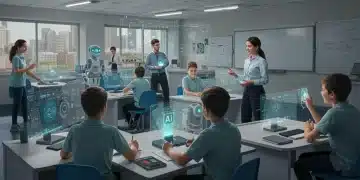
Future Education Trends: 2026 Job Market Insights

Anúncios
The world of work is in constant flux, a dynamic landscape shaped by technological advancements, societal shifts, and unforeseen global events. As we approach 2026, the intersection of education and the job market is becoming more critical than ever. Understanding the key future education trends is not just an academic exercise; it’s a strategic imperative for individuals, educators, and policymakers alike. This comprehensive guide will delve into the expert predictions and insider knowledge surrounding the educational landscape of 2026, offering insights into what skills will be paramount, how learning methods will evolve, and what careers will thrive.
Anúncios
The rapid acceleration of artificial intelligence, automation, and big data is fundamentally reshaping industries, creating new roles while rendering others obsolete. This transformation demands a proactive approach to education, one that emphasizes adaptability, critical thinking, and continuous learning. We are moving beyond the traditional model of education as a one-time event and embracing a lifelong learning paradigm. This article aims to equip you with the foresight needed to navigate this exciting yet challenging future.
The Shifting Sands of the Job Market: What to Expect by 2026
Before we dive into the educational responses, it’s crucial to understand the driving forces behind the changes in the job market. By 2026, several macro-trends will have solidified their impact, necessitating a significant re-evaluation of how we prepare for careers. The gig economy, once a niche concept, is becoming a mainstream component of the labor force, demanding different skill sets and work ethics. Remote work, accelerated by recent global events, is now a permanent fixture for many organizations, requiring proficiency in digital collaboration tools and self-management. These shifts directly influence the future education trends we explore.
Anúncios
Automation and AI: Reshaping Roles and Creating New Opportunities
The pervasive influence of automation and artificial intelligence cannot be overstated. While concerns about job displacement are valid, it’s equally important to recognize the new opportunities these technologies create. Jobs requiring repetitive, manual, or highly predictable tasks are most susceptible to automation. Conversely, roles that demand creativity, complex problem-solving, emotional intelligence, and strategic thinking are becoming more valuable. The ability to work alongside AI, rather than against it, will be a defining characteristic of successful professionals in 2026.
Consider the rise of prompt engineering, AI ethicists, and machine learning specialists – roles that barely existed a decade ago. These emerging professions highlight the need for educational systems to be agile, constantly updating curricula to reflect technological advancements. Understanding the fundamentals of AI, data science, and cybersecurity will no longer be confined to specialized fields but will become foundational literacies across many professions. This integration is a core aspect of future education trends.
The Rise of the Green Economy and Sustainable Practices
Environmental concerns are driving a global shift towards sustainability, leading to the rapid growth of the green economy. By 2026, jobs related to renewable energy, sustainable agriculture, waste management, environmental consulting, and eco-friendly product development will see substantial growth. This trend necessitates a workforce equipped with knowledge in environmental science, engineering, policy, and sustainable business practices. Educational institutions are responding by integrating sustainability themes across disciplines, from business administration to engineering, preparing students for these burgeoning sectors. This focus on sustainability is a significant driver of future education trends.
Globalization and Intercultural Competence
Despite some protectionist sentiments, the globalized nature of business and communication continues to expand. Companies operate across borders, diverse teams collaborate virtually, and markets are increasingly interconnected. This demands a workforce with strong intercultural communication skills, an understanding of global markets, and the ability to navigate diverse cultural contexts. Language proficiency remains valuable, but equally important is cultural intelligence – the capacity to understand and adapt to different cultural norms. Educational programs are increasingly incorporating global studies, exchange programs, and diverse team projects to foster these essential competencies, directly influencing future education trends.
Essential Skills for the 2026 Workforce: Beyond Traditional Knowledge
The traditional emphasis on rote memorization and factual recall is giving way to a focus on skills that enable individuals to adapt, innovate, and contribute meaningfully in a dynamic environment. The 2026 job market will prioritize a blend of cognitive, interpersonal, and digital competencies. These are the skills that education must cultivate.
Critical Thinking and Complex Problem-Solving
In a world awash with information and complex challenges, the ability to think critically and solve intricate problems is paramount. This goes beyond simply identifying issues; it involves analyzing situations from multiple perspectives, evaluating evidence, formulating innovative solutions, and anticipating consequences. Education systems are moving towards project-based learning, case studies, and real-world simulations to develop these higher-order thinking skills, making them a cornerstone of future education trends.
Creativity and Innovation
While AI can generate content, true creativity – the ability to conceive novel ideas, design original solutions, and think divergently – remains a uniquely human attribute. Companies will increasingly seek individuals who can bring fresh perspectives, challenge the status quo, and drive innovation. Educational approaches that foster curiosity, encourage experimentation, and provide platforms for creative expression will be crucial for preparing the workforce of 2026.
Digital Literacy and Data Fluency
Digital literacy extends beyond basic computer skills; it encompasses an understanding of digital ethics, cybersecurity principles, data privacy, and the ability to effectively use various digital tools and platforms. Data fluency, a more advanced form of digital literacy, involves the ability to interpret, analyze, and communicate insights from complex datasets. This doesn’t necessarily mean everyone needs to be a data scientist, but rather that professionals across all fields will need to understand data’s role in decision-making. This fundamental shift is a key component of future education trends.

Emotional Intelligence and Collaboration
As automation handles more routine tasks, the human element of work – collaboration, communication, empathy, and leadership – becomes even more critical. Emotional intelligence, the ability to understand and manage one’s own emotions and those of others, is essential for effective teamwork, conflict resolution, and building strong professional relationships. Educational environments that emphasize group projects, peer learning, and mentorship will be instrumental in developing these vital interpersonal skills, shaping future education trends.
Adaptability and Resilience
The only constant is change, and the future workforce must be highly adaptable. This involves a willingness to learn new skills, embrace new technologies, and adjust to evolving work environments. Resilience – the ability to bounce back from setbacks, manage stress, and maintain motivation in the face of challenges – is equally important. Education should cultivate a growth mindset, encouraging students to view challenges as opportunities for learning and development.
Transformative Learning Methods: How Education will Deliver
The content of education is evolving, and so too are the methods of delivery. Traditional classroom settings are being augmented and, in some cases, replaced by innovative approaches that cater to diverse learning styles and the demands of a rapidly changing world. These shifts are at the heart of future education trends.
Personalized Learning Pathways
One-size-fits-all education is becoming a relic of the past. Personalized learning pathways, leveraging AI and data analytics, can tailor educational content and pace to individual student needs, strengths, and interests. This approach allows students to master concepts at their own speed and pursue areas of study that align with their career aspirations, leading to more engaged and effective learning outcomes.
Micro-credentials and Stackable Learning
The idea of a single degree lasting a lifetime is obsolete. The future of education will feature micro-credentials, badges, and short courses that allow individuals to acquire specific, in-demand skills quickly. These stackable credentials can be combined to build comprehensive skill sets or used to update existing qualifications, making lifelong learning more accessible and flexible. This agile approach to skill acquisition is a key aspect of future education trends.
Experiential and Project-Based Learning
Learning by doing is proving to be far more effective than passive reception of information. Experiential learning, through internships, apprenticeships, simulations, and project-based assignments, provides students with practical experience and the opportunity to apply theoretical knowledge to real-world problems. This not only builds skills but also develops critical thinking, teamwork, and problem-solving abilities.
Blended and Hybrid Learning Models
The distinction between online and in-person learning is blurring. Blended and hybrid models, which combine the best aspects of both, are becoming the norm. This flexibility allows students to access high-quality education regardless of geographical location, while still benefiting from face-to-face interaction and collaborative experiences. The optimal blend will vary by subject and individual, but the trend towards flexible delivery is undeniable and a vital part of future education trends.
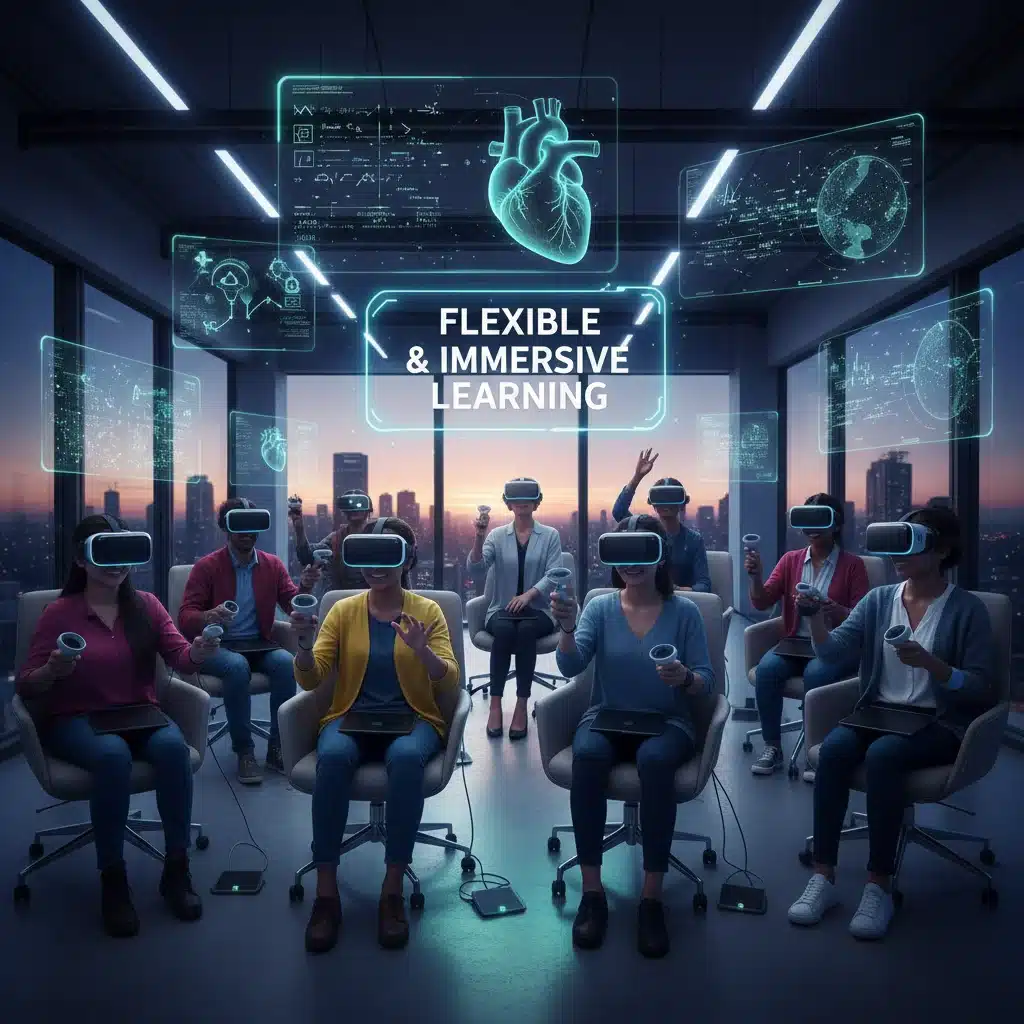
Immersive Technologies: VR, AR, and Gamification
Virtual Reality (VR), Augmented Reality (AR), and gamification are transforming the learning experience, making it more engaging, interactive, and effective. VR can transport students to historical events or allow them to conduct complex scientific experiments virtually. AR can overlay digital information onto the real world, enhancing practical training. Gamification elements, such as points, badges, and leaderboards, can motivate learners and make the educational process more enjoyable. These immersive technologies represent a frontier in future education trends.
The Role of Educators and Institutions in 2026
As the educational landscape evolves, so too does the role of educators and institutions. They are no longer merely disseminators of information but facilitators of learning, mentors, and guides in a complex knowledge ecosystem. Adapting to future education trends is paramount for their continued relevance.
Educators as Facilitators and Coaches
In an era where information is readily available, the teacher’s role shifts from being the sole source of knowledge to a facilitator who guides students through vast amounts of information, helps them develop critical thinking skills, and fosters self-directed learning. Educators will increasingly act as coaches, helping students identify their learning goals, overcome challenges, and develop personalized learning pathways.
Curriculum Redesign and Agility
Educational institutions must continuously review and redesign their curricula to remain relevant. This requires agility and responsiveness to industry needs and technological advancements. Collaboration between academia and industry will become more critical, ensuring that educational programs are aligned with the demands of the job market. This constant evolution is central to addressing future education trends effectively.
Emphasis on Lifelong Learning Ecosystems
Universities and colleges are expanding their offerings beyond traditional degree programs to include continuing education, professional development courses, and micro-credentials for working professionals. They are becoming integral parts of broader lifelong learning ecosystems, providing opportunities for individuals to upskill and reskill throughout their careers. This holistic approach to learning is a defining characteristic of future education trends.
Preparing for 2026: Strategies for Individuals and Organizations
Navigating the evolving educational and job market landscape requires proactive strategies from both individuals and organizations. Embracing future education trends is crucial for success.
For Individuals: Become a Continuous Learner
- Embrace a Growth Mindset: View learning as a continuous journey, not a destination. Be open to new ideas and challenges.
- Develop Core Skills: Prioritize critical thinking, problem-solving, creativity, digital literacy, and emotional intelligence.
- Seek Diverse Learning Opportunities: Utilize online courses, workshops, micro-credentials, and experiential learning to broaden your skill set.
- Network Actively: Build connections with professionals in your field and adjacent industries to stay informed about emerging trends and opportunities.
- Stay Curious: Cultivate a genuine interest in new technologies and societal developments, constantly seeking to understand their implications.
For Organizations: Invest in Workforce Development
- Foster a Learning Culture: Encourage and support continuous learning among employees, providing resources and opportunities for upskilling and reskilling.
- Identify Skill Gaps: Regularly assess the skills needed for future success and proactively address any gaps within your workforce.
- Partner with Educational Institutions: Collaborate with universities and vocational schools to develop tailored training programs and internships.
- Leverage Technology for Training: Utilize AI-powered learning platforms, VR/AR simulations, and online courses to deliver effective and engaging training.
- Promote Internal Mobility: Create pathways for employees to transition into new roles that align with emerging business needs.
Challenges and Considerations in the Future Education Landscape
While the outlook for future education trends is largely positive and transformative, it’s also important to acknowledge the challenges that lie ahead. Addressing these will be crucial for ensuring equitable and effective educational outcomes.
Bridging the Digital Divide
Access to technology and high-speed internet remains a significant barrier for many, exacerbating existing inequalities. As education becomes increasingly digital, ensuring equitable access for all learners, regardless of socioeconomic status or geographical location, is paramount. This requires concerted efforts from governments, educational institutions, and private sector partners to provide necessary infrastructure and resources.
Ensuring Quality and Accreditation
With the proliferation of online courses, micro-credentials, and alternative learning providers, ensuring the quality and accreditation of these offerings becomes more complex. Robust frameworks for quality assurance and recognition of diverse learning pathways will be essential to maintain the value and credibility of educational qualifications. This is a critical challenge for the legitimacy of future education trends.
Teacher Training and Development
Educators themselves need to be equipped with the skills and knowledge to navigate the evolving educational landscape. Continuous professional development, focusing on new pedagogical approaches, technological competencies, and personalized learning strategies, will be vital to support teachers in their evolving roles. Investing in educators is investing in the future of learning.
Ethical Considerations of AI in Education
The integration of AI into education raises important ethical questions regarding data privacy, algorithmic bias, and the role of human judgment. It’s crucial to develop ethical guidelines and responsible AI practices to ensure that these technologies are used to enhance learning in a fair and equitable manner. Careful consideration of these ethics will shape how future education trends unfold.
Conclusion: Embracing the Future of Learning and Work
The year 2026 is not far off, and the trajectory of education and the job market is already clear. The emphasis is shifting from what you know to what you can do, and how quickly you can learn and adapt. The future education trends point towards a more personalized, flexible, and skill-oriented approach to learning, deeply integrated with the demands of a rapidly evolving professional world.
For individuals, this means cultivating a mindset of continuous learning, proactively developing future-proof skills, and embracing new technologies. For educators and institutions, it necessitates agile curriculum development, innovative pedagogical approaches, and a commitment to fostering lifelong learning ecosystems. By understanding and actively responding to these trends, we can collectively build a more prepared, skilled, and resilient workforce for the challenges and opportunities that 2026 and beyond will bring. The journey ahead is one of continuous discovery and adaptation, promising a future where learning is truly lifelong and deeply impactful.