Global Energy Transition: 4 Policies Driving US Renewable Investments
Anúncios
The imperative to transition from fossil fuels to cleaner, more sustainable energy sources has never been more urgent. As the world grapples with the escalating impacts of climate change, the global energy landscape is undergoing a profound transformation. This shift, often referred to as the global energy transition, is a complex, multi-faceted process driven by technological innovation, economic incentives, and, crucially, international policy frameworks. For the United States, this transition presents both challenges and unparalleled opportunities, particularly in attracting and expanding US renewable investments.
Anúncios
The year 2026 stands as a significant marker in this ongoing journey, with many international agreements and national commitments coming into sharper focus. The decisions made and policies enacted today will profoundly shape the energy mix of tomorrow, influencing everything from job creation and economic growth to national security and environmental health. This article will explore how four key international policies are acting as powerful catalysts, driving substantial US renewable investments and accelerating the global pivot towards a sustainable energy future.
Understanding these policies is not merely an academic exercise; it is essential for policymakers, investors, businesses, and indeed, every citizen concerned about the future of our planet. The ripple effects of these international frameworks are felt domestically, creating a more favorable environment for innovation, deployment, and financial commitment in the renewable energy sector across the United States.
Anúncios
The Paris Agreement: A Foundational Pillar for US Renewable Investments
The Paris Agreement, adopted in 2015, remains the cornerstone of international climate action. Its primary goal is to limit global warming to well below 2, preferably to 1.5 degrees Celsius, compared to pre-industrial levels. To achieve this, countries commit to Nationally Determined Contributions (NDCs), outlining their individual efforts to reduce greenhouse gas emissions. While the agreement itself doesn’t mandate specific renewable energy targets, its overarching objective creates a powerful incentive for nations, including the U.S., to decarbonize their economies, thereby stimulating US renewable investments.
For the United States, rejoining the Paris Agreement in 2021 signaled a renewed commitment to climate action and a clear signal to the market that renewable energy is a priority. This commitment translates into domestic policies and financial mechanisms designed to support the transition. The Biden administration, for instance, has set ambitious targets: a 50-52% reduction from 2005 levels in economy-wide net greenhouse gas pollution by 2030 and a 100% clean electricity grid by 2035. These targets, directly influenced by the spirit and objectives of the Paris Agreement, necessitate massive US renewable investments in solar, wind, geothermal, hydropower, and advanced energy storage technologies.
The Paris Agreement’s framework encourages transparency and regular reporting, fostering a competitive environment among nations to demonstrate progress. This global spotlight on climate action inadvertently drives innovation and efficiency in the renewable energy sector, making US renewable investments more attractive. Furthermore, the agreement’s emphasis on climate finance and technology transfer, while often directed towards developing nations, also creates a global ecosystem supportive of renewable energy growth, where American companies can find new markets and partnerships.
The long-term certainty provided by the Paris Agreement’s goals helps de-risk long-term investments in renewable energy infrastructure. Investors are more willing to commit capital when they see a clear, sustained political will to move towards a low-carbon economy. This stability is crucial for large-scale projects that require significant upfront capital and have long operational lifespans. Consequently, the Paris Agreement acts as a foundational policy, indirectly but profoundly, boosting US renewable investments by establishing a clear global direction for decarbonization.
International Renewable Energy Agency (IRENA) Initiatives and Their Impact
The International Renewable Energy Agency (IRENA) plays a critical role in facilitating the global energy transition by promoting the widespread adoption and sustainable use of all forms of renewable energy. As an intergovernmental organization, IRENA provides practical advice and support to countries, shares best practices, and offers comprehensive data on renewable energy potential, technologies, policies, and financing. Its initiatives, while global in scope, have a direct bearing on the trajectory of US renewable investments.
IRENA’s work in standardizing renewable energy technologies and developing robust policy frameworks helps create a more predictable and efficient global market. For US companies operating or looking to expand into international markets, IRENA’s guidelines can reduce market entry barriers and foster greater collaboration. Domestically, IRENA’s research and analysis often inform policy debates and help shape incentive programs aimed at accelerating renewable energy deployment. For example, IRENA’s detailed cost analyses demonstrate the increasingly competitive nature of renewable energy compared to fossil fuels, providing compelling data for policymakers and investors in the U.S. considering US renewable investments.
One of IRENA’s key contributions is its focus on capacity building and knowledge sharing. By bringing together experts and policymakers from around the world, IRENA helps disseminate cutting-edge research and best practices in renewable energy development. This global exchange of ideas can inspire new approaches and accelerate technological adoption within the United States. For instance, insights gained from successful offshore wind projects in Europe, often highlighted by IRENA, can directly inform and de-risk similar US renewable investments and projects along American coastlines.
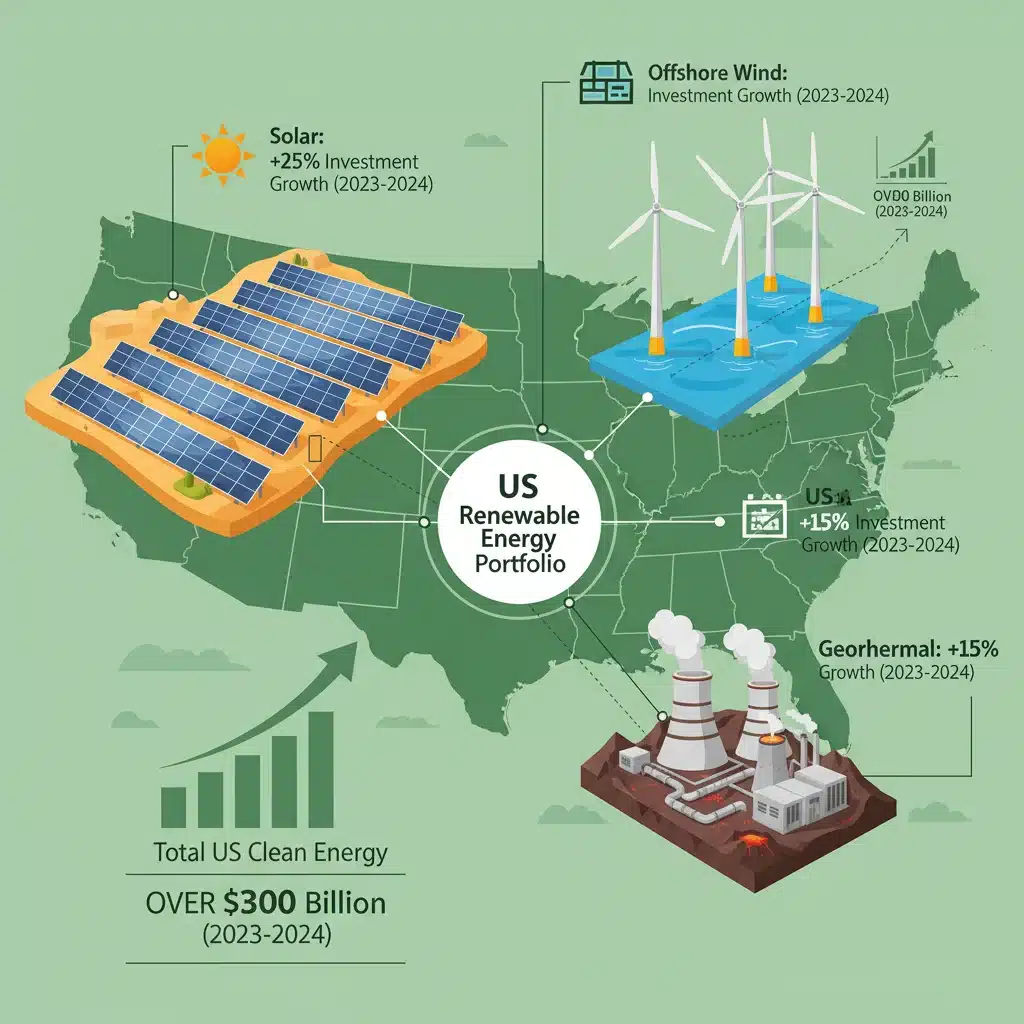
Moreover, IRENA’s work on renewable energy roadmaps and scenarios helps countries, including the U.S., visualize pathways to achieving their decarbonization goals. These comprehensive analyses consider technological advancements, economic feasibility, and policy interventions, providing a strategic blueprint for scaling up renewable energy. By participating in IRENA’s initiatives, the U.S. can leverage global expertise to refine its own renewable energy strategies, thereby creating a more robust and attractive environment for US renewable investments.
The agency also plays a significant role in mobilizing finance for renewable energy projects. Through partnerships with financial institutions and development banks, IRENA helps de-risk investments and facilitate access to capital, particularly for emerging markets. While the U.S. has a well-developed financial sector, IRENA’s global efforts to streamline renewable energy finance can indirectly benefit US renewable investments by fostering a more liquid and interconnected global market for green finance.
The Glasgow Climate Pact and its Call for Accelerated Action
The Glasgow Climate Pact, adopted at COP26 in November 2021, built upon the foundation of the Paris Agreement, emphasizing the urgency of climate action and calling for accelerated efforts to reduce emissions. A crucial outcome was the agreement to ‘phase down’ unabated coal power and ‘phase out’ inefficient fossil fuel subsidies. This explicit mention of fossil fuels marked a significant step forward in international climate negotiations, sending a strong signal to global markets about the diminishing role of traditional energy sources and the ascendance of renewables.
For the United States, the Glasgow Climate Pact reinforced the domestic policy direction towards decarbonization. The call to accelerate action translates into a heightened urgency to deploy renewable energy at scale. This imperative directly fuels US renewable investments, as both public and private sectors respond to the clear signal that the world is moving away from fossil fuels. The commitment to phase down coal, for example, encourages investment in alternatives like solar and wind to ensure grid stability and energy security as coal plants retire.
Furthermore, the Glasgow Pact emphasized the importance of enhanced NDCs, urging countries to revisit and strengthen their 2030 emissions reduction targets. This ongoing process of ambition-raising means that the pressure to increase US renewable investments will only intensify, as the nation strives to meet and ideally exceed its climate commitments. The pact also highlighted the critical role of non-state actors, including businesses and financial institutions, in achieving climate goals, further encouraging private sector engagement and investment in renewable energy within the U.S.
The pact’s focus on international collaboration for technology development and deployment also benefits US renewable investments. By fostering a global environment of shared innovation, American companies can access new technologies and expertise, enhancing their competitiveness and accelerating the adoption of advanced renewable solutions. The collective push from the Glasgow Climate Pact provides a powerful tailwind for the renewable energy sector, making US renewable investments a strategically sound and increasingly lucrative proposition.
G7 and G20 Commitments: Setting the Pace for Green Finance
The G7 and G20 groups, representing the world’s leading economies, play an instrumental role in shaping global economic and environmental policy. Their commitments to climate action and sustainable development directly influence financial flows and investment priorities worldwide, including significant impacts on US renewable investments. These forums provide platforms for major economies to coordinate efforts, set ambitious targets, and mobilize the necessary finance for the global energy transition.
Recent G7 and G20 communiqués have consistently reiterated strong commitments to achieving net-zero emissions by mid-century, phasing out fossil fuel subsidies, and significantly increasing renewable energy capacity. For instance, the G7 nations have pledged to decarbonize their electricity sectors by 2035, a target that directly necessitates massive US renewable investments in clean power generation and grid infrastructure. These high-level political commitments provide a clear signal to financial markets that renewable energy is a priority investment area, attracting both public and private capital.
Moreover, the G7 and G20 often discuss and endorse mechanisms for green finance, such as sustainable bond markets, carbon pricing, and climate risk disclosure. These initiatives aim to redirect capital towards environmentally friendly projects and help integrate climate considerations into mainstream financial decision-making. As a major economy and financial hub, the United States is deeply integrated into these global financial discussions. The adoption of G7/G20-backed green finance principles within the U.S. can significantly enhance the attractiveness and accessibility of capital for US renewable investments.

The collective economic weight of the G7 and G20 also means their policies can create significant market demand for renewable technologies. When these nations commit to large-scale renewable deployment, it fosters economies of scale, drives down costs, and accelerates technological innovation globally. This creates a virtuous cycle where increased demand leads to lower costs, which in turn stimulates more US renewable investments. For example, the collective push for electric vehicles among G7 nations directly influences the demand for renewable electricity to power charging infrastructure, further boosting investment in clean energy generation within the U.S.
The Synergy of Policies and Future Outlook for US Renewable Investments
The four international policies discussed – the Paris Agreement, IRENA initiatives, the Glasgow Climate Pact, and G7/G20 commitments – do not operate in isolation. Instead, they form a synergistic ecosystem, each reinforcing the others’ objectives and collectively accelerating the global energy transition. The Paris Agreement sets the overarching framework, IRENA provides the technical guidance and data, the Glasgow Pact injects urgency and specific targets, and the G7/G20 mobilize the necessary political and financial will. This coordinated international effort creates an exceptionally fertile ground for US renewable investments.
The confluence of these policies provides regulatory certainty, market signals, and a shared global vision that significantly de-risks renewable energy projects. For investors, this means a more stable and predictable environment for committing capital. For businesses, it translates into clearer growth pathways and opportunities for innovation. For the U.S. economy, it means job creation in emerging green industries, enhanced energy independence, and leadership in critical clean energy technologies.
Looking towards 2026 and beyond, the trajectory for US renewable investments appears robust. The ongoing evolution of these international policies, coupled with domestic incentives like the Inflation Reduction Act, is expected to continue driving unprecedented growth in the renewable energy sector. We can anticipate further advancements in energy storage, grid modernization, green hydrogen, and carbon capture technologies, all fueled by a combination of policy support and private capital.
However, challenges remain. Issues such as grid integration, supply chain vulnerabilities, and permitting complexities will require continuous attention and innovative solutions. Yet, the momentum generated by international cooperation and the increasing economic competitiveness of renewables suggest that these hurdles are surmountable. The global energy transition is not just an environmental necessity; it is an economic opportunity, and the United States, guided by these international policies, is well-positioned to capitalize on it.
Conclusion
The global energy transition is a defining challenge and opportunity of our time, with 2026 marking a critical juncture in this journey. International policies, such as the Paris Agreement, IRENA initiatives, the Glasgow Climate Pact, and the commitments from the G7 and G20, are not merely aspirational declarations; they are powerful drivers shaping national energy strategies and, crucially, accelerating US renewable investments. These frameworks provide the necessary impetus, direction, and often the financial architecture to transition away from fossil fuels towards a sustainable, clean energy future.
For the United States, embracing and actively participating in these international efforts is paramount. It ensures that the nation remains competitive in the global clean energy race, fosters innovation, creates high-quality jobs, and contributes significantly to mitigating climate change. The continued growth in US renewable investments is a testament to the effectiveness of these policies and a beacon of hope for a more sustainable and prosperous world. As we move forward, sustained commitment to these international agreements and proactive domestic policy implementation will be key to unlocking the full potential of renewable energy and securing a resilient energy future for all.