
Understanding the 2026 Pell Grant Changes: What Every Student Needs to Know (RECENT UPDATES)
Anúncios
The landscape of financial aid for higher education is continuously evolving, and one of the most significant shifts on the horizon involves the 2026 Pell Grant. As a cornerstone of federal student aid, the Pell Grant program provides crucial funding to millions of undergraduate students nationwide, helping them access and afford college. However, with upcoming changes slated for 2026, it’s imperative for current and prospective students, parents, and educational advisors to understand what these modifications entail. These updates are not merely minor adjustments; they represent a comprehensive reevaluation of how federal student aid is distributed, aiming to streamline processes, expand eligibility, and potentially increase award amounts for many.
The primary goal behind these changes is to enhance educational accessibility and equity. For decades, the Pell Grant has been a lifeline for students from low-income backgrounds, enabling them to pursue degrees that might otherwise be out of reach. The 2026 Pell Grant reforms are designed to build upon this foundation, addressing some of the historical challenges and complexities associated with federal aid. This article will delve deep into the specifics of these anticipated changes, offering a clear, concise, and actionable guide to help you navigate the new environment. We’ll cover everything from the underlying legislative acts driving these changes to the practical implications for your Free Application for Federal Student Aid (FAFSA) and your overall financial aid package. Understanding these updates now can significantly impact your financial planning and educational journey.
The Foundation of Change: Legislative Acts and Their Impact on the 2026 Pell Grant
The modifications to the 2026 Pell Grant are not arbitrary; they are the result of significant legislative efforts aimed at reforming federal student aid. The most influential of these is the Future Act, which introduced a modernized FAFSA and fundamentally altered how eligibility for federal student aid, including the Pell Grant, is determined. While many aspects of the Future Act began to roll out in the 2024-2025 aid year, its full implications and subsequent refinements will continue to shape the program through 2026 and beyond. This legislation sought to simplify the FAFSA, making it less burdensome for families to complete, and to better target aid to those with the greatest financial need.
Anúncios
Key components of the Future Act that will impact the 2026 Pell Grant include changes to the Expected Family Contribution (EFC) calculation, which has now been replaced by the Student Aid Index (SAI). The SAI is designed to be a more equitable measure of a family’s ability to pay for college, taking into account various factors that were previously overlooked or inadequately addressed. This shift from EFC to SAI is not just a semantic change; it fundamentally alters the algorithm used to determine a student’s financial need, directly influencing Pell Grant eligibility and award amounts. For many students, particularly those from very low-income households, the SAI is expected to be lower than their previous EFC, potentially leading to increased Pell Grant awards.
Furthermore, the legislation introduced changes to the treatment of certain income and assets, simplifying the process and reducing the number of questions on the FAFSA. For instance, questions related to cash, savings, and checking accounts have been streamlined, and the exclusion of certain small business and farm assets for some families aims to provide a more accurate picture of financial need. These legislative actions are part of a broader federal strategy to make higher education more accessible and affordable, recognizing the critical role that federal grants play in achieving these goals. Understanding the legislative intent behind these changes is crucial for comprehending the ‘why’ behind the 2026 Pell Grant adjustments.
Key Changes to Pell Grant Eligibility and Award Amounts for 2026
The most significant impact of the 2026 Pell Grant changes will be felt in eligibility criteria and award calculations. Historically, Pell Grant eligibility was primarily determined by the EFC, along with the student’s cost of attendance (COA) and enrollment status. With the introduction of the SAI, the calculation becomes more nuanced, but in many cases, more favorable for students with the highest need.
Student Aid Index (SAI) vs. Expected Family Contribution (EFC)
The transition from EFC to SAI is central to the 2026 Pell Grant modifications. The SAI can be a negative number, ranging from -1500 to 999999. A negative SAI indicates that a student has a very high financial need, potentially qualifying them for the maximum Pell Grant award. This is a crucial distinction from the EFC, which could never go below zero. The new formula also simplifies the consideration of family size, linking it directly to federal poverty levels, which can further benefit larger families.
Expanded Eligibility for the 2026 Pell Grant
One of the most exciting aspects of the 2026 Pell Grant changes is the potential for expanded eligibility. The new SAI calculation is designed to identify more students as having significant financial need. This means that some students who were previously ineligible for a Pell Grant or only qualified for a minimal amount might now receive more substantial awards. This expansion is particularly aimed at increasing access for students from low-income backgrounds, single-parent households, and those with unusual circumstances that were not adequately captured by the older EFC model.
Furthermore, the Future Act and subsequent refinements have made it easier for incarcerated individuals to receive Pell Grants, reopening educational opportunities for a population that has historically faced significant barriers to higher education. This specific change underscores the broader goal of increasing educational equity across various demographics.
Changes in Award Amounts
While the exact maximum Pell Grant award for 2026 will depend on congressional appropriations, the new calculation methodology is expected to result in higher awards for many eligible students. The maximum Pell Grant is tied to the federal poverty level and is designed to cover a significant portion of the cost of attendance for students with the lowest SAIs. The shift to SAI aims to ensure that students with zero or negative SAIs receive the maximum Pell Grant, provided they meet other eligibility requirements.
For students whose SAIs are above zero, their Pell Grant award will be determined by subtracting their SAI from the maximum Pell Grant award, up to their cost of attendance. This new approach is intended to provide a more transparent and predictable award calculation, allowing students to better estimate their potential financial aid.
The New FAFSA Experience: What to Expect for the 2026 Pell Grant Application
The application process for the 2026 Pell Grant will primarily be through the modernized FAFSA. While many of the FAFSA changes were implemented for the 2024-2025 aid year, ongoing refinements and user experience improvements will continue to impact how students apply for aid in 2026. The goal is to make the FAFSA simpler, shorter, and more intuitive.

Simplified Application Process
The new FAFSA significantly reduces the number of questions, making it less daunting for applicants. Many questions that were deemed redundant or less critical for determining financial need have been removed. This simplification is expected to reduce the time it takes to complete the form, thereby encouraging more students to apply for federal aid.
Direct Data Exchange with the IRS
One of the most impactful changes for the 2026 Pell Grant application process is the mandatory direct data exchange with the IRS. This feature, known as the Future Act Direct Data Exchange (FA-DDX), allows the IRS to directly share tax information with the Department of Education. For most applicants, this means they will no longer need to manually input tax information, significantly reducing errors and the verification burden. All contributors to a student’s FAFSA (student, spouse, parents) must provide consent for their tax data to be retrieved directly from the IRS. Without this consent, the FAFSA cannot be processed, and the student will not be eligible for federal student aid, including the Pell Grant.
New Terminology and Roles
The modernized FAFSA also introduces new terminology. As mentioned, EFC is now SAI. Additionally, the term ‘parent’ has been replaced with ‘contributor,’ which refers to anyone required to provide financial information on the FAFSA (e.g., the student, their spouse, a biological or adoptive parent, or stepparent). Each contributor will need their own Federal Student Aid (FSA) ID to access and sign the FAFSA. Understanding these new terms is essential for navigating the application correctly for your 2026 Pell Grant.
Impact on Undocumented Parents
A significant improvement for families with undocumented parents is that these parents can now create an FSA ID to contribute to the FAFSA, even without a Social Security Number (SSN). This change removes a major barrier that previously prevented many eligible students from receiving federal aid due to their parents’ immigration status. The Department of Education has implemented a manual process for verifying identity for those without an SSN, ensuring that all eligible students can apply for the 2026 Pell Grant.
Maximizing Your 2026 Pell Grant: Strategies and Tips
With the impending changes to the 2026 Pell Grant, proactive planning and strategic application are more important than ever. Here are some key strategies and tips to help you maximize your potential Pell Grant award:
1. File Your FAFSA Early
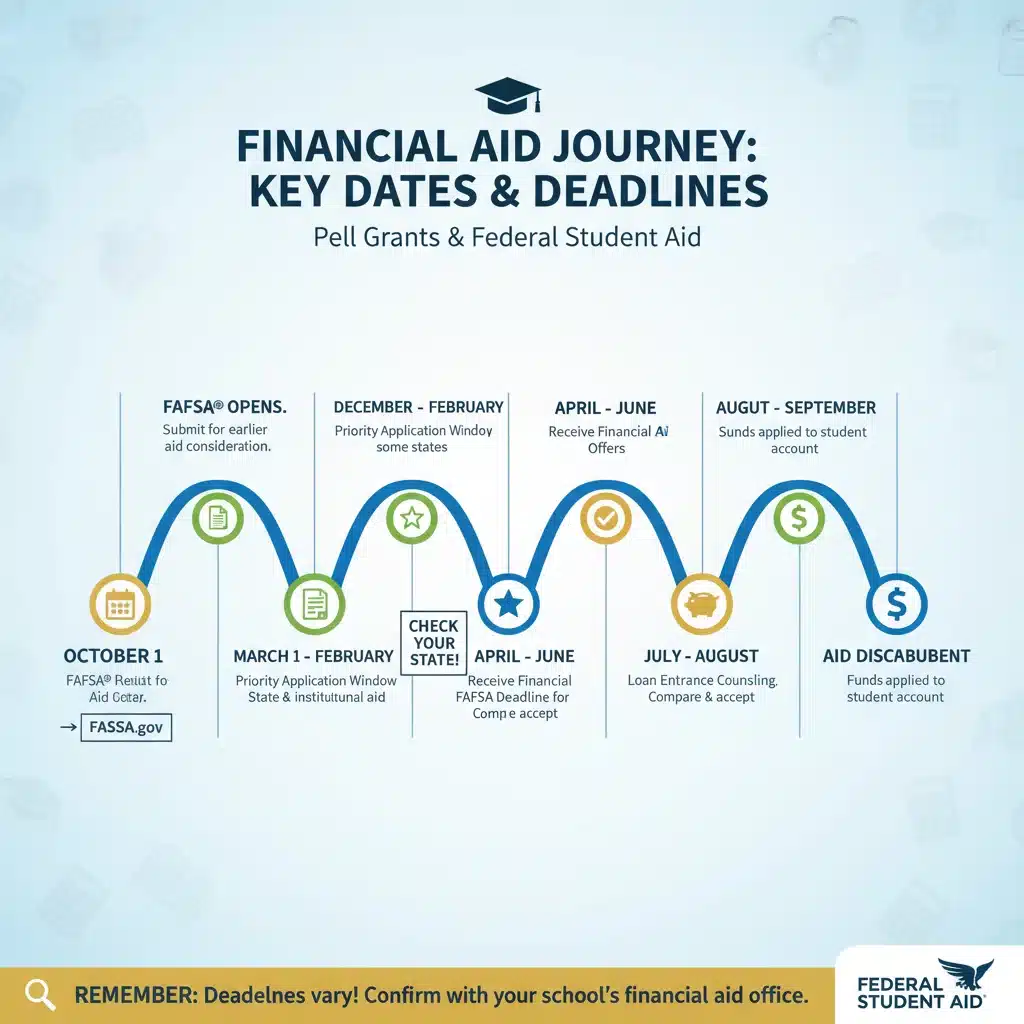
While federal Pell Grant funds are not awarded on a first-come, first-served basis, many other forms of federal, state, and institutional aid are. Completing your FAFSA as soon as it becomes available (typically October 1st each year) ensures you meet priority deadlines for all available aid. For the 2026 Pell Grant, keep an eye on the official FAFSA release date for the 2026-2027 aid year and aim to complete it promptly.
2. Understand Your Student Aid Index (SAI)
Familiarize yourself with how the SAI is calculated. While you won’t calculate it yourself, understanding the factors that influence it (income, assets, family size, number of students in college) can help you anticipate your potential eligibility. Tools and resources will become available to help you estimate your SAI based on the new formula, giving you a clearer picture of your 2026 Pell Grant prospects.
3. Provide Consent for IRS Data Retrieval
The FA-DDX is mandatory. Ensure all required contributors provide consent for their tax information to be directly retrieved from the IRS. Without this consent, your FAFSA will not be processed, and you will not be eligible for any federal student aid, including the 2026 Pell Grant. This is a critical step that cannot be overlooked.
4. Report All Income and Assets Accurately
Even with a simplified FAFSA, accuracy is paramount. Report all required income and asset information truthfully and completely. Errors can lead to delays in processing or even a reduction in your aid package. If you have any unusual circumstances that affect your family’s financial situation (e.g., job loss, high medical expenses), contact your college’s financial aid office. They may be able to make professional judgment adjustments to your SAI, potentially increasing your 2026 Pell Grant eligibility.
5. Maintain Satisfactory Academic Progress (SAP)
To continue receiving federal student aid, including the Pell Grant, you must maintain satisfactory academic progress as defined by your college. This typically involves maintaining a certain GPA and completing a minimum number of credits each semester. Failing to meet SAP can result in the loss of your Pell Grant eligibility, so it’s crucial to stay on track academically.
6. Explore Other Aid Options
While the 2026 Pell Grant is a fantastic resource, it’s often not enough to cover the full cost of attendance. Always explore other forms of financial aid, including institutional scholarships, state grants, and private scholarships. Many colleges have their own grant programs that can supplement federal aid. Don’t limit your search; a comprehensive approach to financial aid can significantly reduce your out-of-pocket college costs.
Who Benefits Most from the 2026 Pell Grant Changes?
The reforms to the 2026 Pell Grant program are designed with a specific focus on increasing equity and access. While many students may see some benefit, certain populations are expected to gain the most from these changes:
- Students from Low-Income Households: The new SAI calculation, particularly the ability for the SAI to be negative, is highly beneficial for students from the lowest-income families. These students are more likely to qualify for the maximum Pell Grant, providing them with more substantial financial support for their education.
- Students from Large Families: The simplified approach to accounting for family size, linking it to federal poverty levels, can result in lower SAIs for larger families, potentially increasing their Pell Grant eligibility and award amounts.
- Single Parents and Independent Students: Changes in how household income and dependency status are assessed may also benefit single parents and other independent students, providing them with a more accurate reflection of their financial need.
- Students with Undocumented Parents: The ability for undocumented parents to create an FSA ID and contribute to the FAFSA removes a significant barrier, allowing their U.S. citizen or eligible non-citizen children to access federal financial aid, including the 2026 Pell Grant.
- Incarcerated Individuals: The reinstatement of Pell Grant eligibility for incarcerated individuals opens up crucial educational pathways, promoting rehabilitation and reducing recidivism.
These targeted benefits underscore the federal government’s commitment to making higher education a reality for a broader and more diverse student population, recognizing the transformative power of education for individuals and society as a whole.
Potential Challenges and How to Address Them
While the 2026 Pell Grant changes are largely positive, navigating any new system can present challenges. Being aware of these potential hurdles allows you to prepare and address them proactively:
Technical Glitches and Delays
As with any large-scale system overhaul, there may be initial technical glitches or delays in FAFSA processing. Stay informed by regularly checking the Department of Education’s Federal Student Aid (FSA) website and your college’s financial aid office for updates. Apply early to give yourself a buffer against any potential processing delays.
Understanding New Terminology and Processes
The shift from EFC to SAI and other new terms can be confusing. Take the time to understand the new language and how it applies to your situation. Utilize resources provided by FSA, your high school counselors, or college financial aid advisors. Don’t hesitate to ask questions if something is unclear regarding your 2026 Pell Grant application.
Mandatory IRS Data Exchange Consent
The requirement for all contributors to consent to IRS data retrieval is non-negotiable. This might be a point of confusion or contention for some families. Ensure all necessary parties understand this requirement and provide their consent. Without it, federal aid will not be disbursed. Communicate clearly with all contributors well in advance of the FAFSA application period.
Varying Institutional Aid Policies
While federal aid policies are changing, institutional aid policies may also adapt. Some colleges might adjust their own scholarship and grant programs in response to the federal changes. Always communicate directly with the financial aid office at each college you are considering to understand how the 2026 Pell Grant changes might interact with their specific aid packages.
The Future of Federal Student Aid Beyond 2026
The 2026 Pell Grant changes are part of an ongoing commitment to refine and improve federal student aid programs. While these updates are significant, the conversation around college affordability and access is continuous. Future legislative actions may further adjust Pell Grant eligibility, award amounts, and the overall structure of federal financial aid. Students and families should remain vigilant and informed about any new developments.
Ongoing discussions in Congress often revolve around increasing the maximum Pell Grant award to keep pace with rising college costs, expanding eligibility to include short-term training programs, and simplifying loan repayment options. These broader conversations highlight the dynamic nature of federal financial aid and the importance of staying engaged with policy discussions that directly impact educational funding.
For students, this means maintaining an awareness of federal student aid announcements, subscribing to updates from the Department of Education, and regularly consulting with their college’s financial aid office. The goal is always to ensure that eligible students can access the resources they need to achieve their educational aspirations, and the 2026 Pell Grant changes are a crucial step in that direction.
Conclusion: Preparing for Your Educational Future with the 2026 Pell Grant
The upcoming 2026 Pell Grant changes represent a pivotal moment for federal student aid. With a modernized FAFSA, a new Student Aid Index (SAI) replacing the EFC, and expanded eligibility criteria, millions of students stand to benefit from more accessible and potentially more generous financial assistance. These reforms are a testament to the ongoing efforts to make higher education attainable for all, regardless of socioeconomic background.
As you plan for your educational future, remember that knowledge is power. Understanding the intricacies of the 2026 Pell Grant changes, the new FAFSA process, and the strategies for maximizing your aid is essential. Start early, gather all necessary documentation, and don’t hesitate to seek guidance from financial aid professionals. By taking these proactive steps, you can confidently navigate the evolving landscape of federal student aid and secure the funding needed to pursue your academic dreams. The investment in your education is an investment in your future, and the Pell Grant remains a vital partner in that journey.