The landscape of human mobility is in constant flux, shaped by an intricate web of geopolitical events, economic disparities, environmental changes, and social dynamics. As we approach 2026, the world stands on the cusp of significant transformations in global migration patterns. These shifts are not merely statistical anomalies; they represent profound human stories, economic opportunities, and formidable policy challenges. Understanding these emerging trends is crucial for nations worldwide, and particularly for the United States, a perennial destination for migrants, as it navigates its future immigration policies and societal integration efforts.
Anúncios
For decades, migration has been a cornerstone of global development, fueling economies, enriching cultures, and providing refuge for those fleeing persecution or conflict. However, the forces driving migration are evolving rapidly. Traditional push and pull factors are being augmented by new accelerators, creating complex and often unpredictable flows. This article will delve into the two major shifts projected to dominate global migration patterns by 2026, meticulously analyzing their underlying causes, anticipated trajectories, and the far-reaching implications they hold for U.S. immigration policy, labor markets, social cohesion, and international relations.
The discourse surrounding migration is often polarized, characterized by passionate arguments both for and against increased immigration. Yet, a nuanced understanding requires moving beyond rhetoric to examine the empirical evidence and anticipate future scenarios. By 2026, we expect to see a confluence of factors that will redefine who migrates, where they go, and the challenges they face. This forward-looking analysis aims to provide clarity on these critical developments, offering insights that can inform more effective and humane policy responses.
Anúncios
The First Major Shift: Climate-Induced Displacement and its Northward Push
One of the most undeniable and rapidly accelerating drivers of future global migration patterns is climate change. While its effects have been discussed for years, by 2026, we anticipate a significant escalation in climate-induced displacement, particularly from regions highly vulnerable to environmental degradation. This isn’t just about rising sea levels; it encompasses prolonged droughts, extreme weather events, desertification, and resource scarcity, all of which render vast areas uninhabitable or economically unviable.
Regions like Sub-Saharan Africa, parts of South Asia, and Central America are already experiencing the brunt of these changes. Agricultural lands are becoming barren, water sources are dwindling, and livelihoods dependent on natural resources are collapsing. For millions, migration becomes not a choice, but a necessity for survival. The northward push, specifically towards more stable and resource-rich nations, including the United States, is expected to intensify dramatically.
Drivers of Climate Migration Acceleration
Several factors will contribute to the accelerated pace of climate migration:
- Increased Frequency and Intensity of Extreme Weather Events: Hurricanes, floods, and droughts will become more common and severe, displacing populations with little time for recovery.
- Desertification and Land Degradation: Productive land will continue to shrink, exacerbating food insecurity and forcing agricultural communities to relocate.
- Water Scarcity: Competition for potable water will intensify, leading to internal and cross-border movements.
- Coastal Erosion and Sea-Level Rise: Low-lying coastal areas and island nations will face increasing threats, leading to permanent displacement.
- Conflict Amplification: Resource scarcity, particularly water and arable land, can exacerbate existing tensions and spark new conflicts, forcing people to flee.
The implications for U.S. immigration policy are profound. The current legal frameworks are largely designed to address economic migration, family reunification, and asylum claims based on political persecution. They are ill-equipped to handle large-scale movements driven by environmental factors. The concept of ‘climate refugee’ is not universally recognized in international law, creating significant legal and humanitarian challenges.
Policy Challenges and Opportunities for the U.S.
The U.S. will need to consider:
- Revisiting Asylum and Refugee Status: Should environmental factors be incorporated into definitions of persecution or humanitarian need? This could necessitate new legislative frameworks.
- Humanitarian Aid and Disaster Preparedness: Investing in climate resilience and adaptation in vulnerable regions could mitigate some displacement, but also prepare for humanitarian responses.
- Border Management and Infrastructure: The sheer volume of potential climate migrants could strain existing border resources and processing capabilities.
- International Cooperation: Working with source countries and international organizations will be critical to manage these flows humanely and effectively.
- Public Perception and Integration: Addressing public concerns and developing strategies for the successful integration of climate migrants will be paramount.
This shift represents a fundamental challenge to the traditional understanding of migration and demands innovative, proactive policy solutions from the U.S. government.
The Second Major Shift: Demographic Imbalances and the Quest for Skilled Labor
The second significant shift in global migration patterns by 2026 is driven by stark demographic imbalances across different regions of the world, coupled with an escalating global demand for skilled labor. While some nations grapple with rapidly aging populations and declining birth rates, others continue to experience robust population growth, creating a powerful push-pull dynamic for migration.
Developed nations, particularly in North America and Europe, are facing critical labor shortages in key sectors, from healthcare and technology to manufacturing and agriculture. Their aging workforces are retiring faster than new entrants can replace them, leading to economic stagnation and a strain on social welfare systems. Meanwhile, many developing countries have a youthful, growing population, often with high unemployment rates or limited opportunities for advancement. This creates a natural impetus for outward migration in search of better prospects.
Demographic Disparities and Economic Pull Factors
Key aspects of this shift include:
- Aging Populations in Developed Nations: Countries like the U.S., Canada, and many European nations face an increasingly top-heavy demographic pyramid, leading to a shrinking tax base and workforce.
- Youth Bulges in Developing Nations: Many countries in Africa, parts of Asia, and Latin America have large youth populations entering the job market, often exceeding local absorption capacities.
- Global Skill Gaps: Even within developed nations, there are specific shortages of highly skilled workers (e.g., AI specialists, engineers, medical professionals) and essential workers (e.g., caregivers, agricultural workers).
- Brain Drain and Gain: This dynamic can lead to a ‘brain drain’ from developing countries as their educated professionals seek opportunities abroad, but also a ‘brain gain’ for host countries that attract these talents.
- Remittances: Migrants sending money back to their home countries remain a significant economic factor, incentivizing further migration and providing crucial support to families and national economies.

The U.S., with its relatively stable birth rate compared to some European counterparts but still facing an aging demographic, will increasingly look to immigration as a solution to maintain economic competitiveness and support its social security system. However, the nature of this migration will likely shift towards a greater emphasis on skills and economic contribution.
Implications for U.S. Immigration Policy
The U.S. will need to adapt its policies to:
- Skill-Based Immigration: There will be an increased focus on attracting and retaining highly skilled professionals through programs like H-1B visas, potentially expanding their quotas or streamlining application processes.
- Sector-Specific Visa Programs: Developing targeted visa programs for industries experiencing acute labor shortages (e.g., healthcare, technology, agriculture) could become more prevalent.
- Educational Pathways: Encouraging international students to study in the U.S. and providing clearer pathways for them to remain post-graduation will be vital to capturing global talent.
- Integration and Recognition of Foreign Credentials: Ensuring that foreign qualifications are recognized and that immigrants can quickly enter the workforce in their respective fields will maximize their economic contribution.
- Addressing Low-Skilled Labor Needs: While the focus may shift to skills, the need for essential, lower-skilled labor in sectors like agriculture and hospitality will persist, requiring robust guest worker programs that protect worker rights.
This demographic-driven shift presents both an opportunity to bolster the U.S. economy and a challenge to create an immigration system that is agile, fair, and responsive to evolving labor market needs.
Intersectional Impacts and Broader Implications for the U.S.
The two major shifts in global migration patterns – climate-induced displacement and demographically-driven skilled labor migration – are not isolated phenomena. They often intersect and amplify each other, creating even more complex scenarios for the U.S. to navigate. For instance, climate change in one region might displace skilled workers who then seek opportunities in developed nations, blurring the lines between humanitarian and economic migration.
Economic Repercussions
The economic implications for the U.S. are multifaceted:
- Labor Market Dynamics: Immigration can fill critical labor gaps, boost innovation, and contribute to economic growth. However, it also raises questions about wage impacts for native-born workers and the need for robust labor protections.
- Fiscal Impact: Immigrants contribute significantly to the tax base and consume public services. Understanding the net fiscal impact requires careful analysis of age, skill level, and integration outcomes.
- Entrepreneurship and Innovation: Immigrants have historically been highly entrepreneurial, starting businesses at higher rates than native-born populations, which can drive economic dynamism.
- Remittances: While remittances flow out of the U.S., they are crucial for the economies of many sending countries, influencing international relations and development.
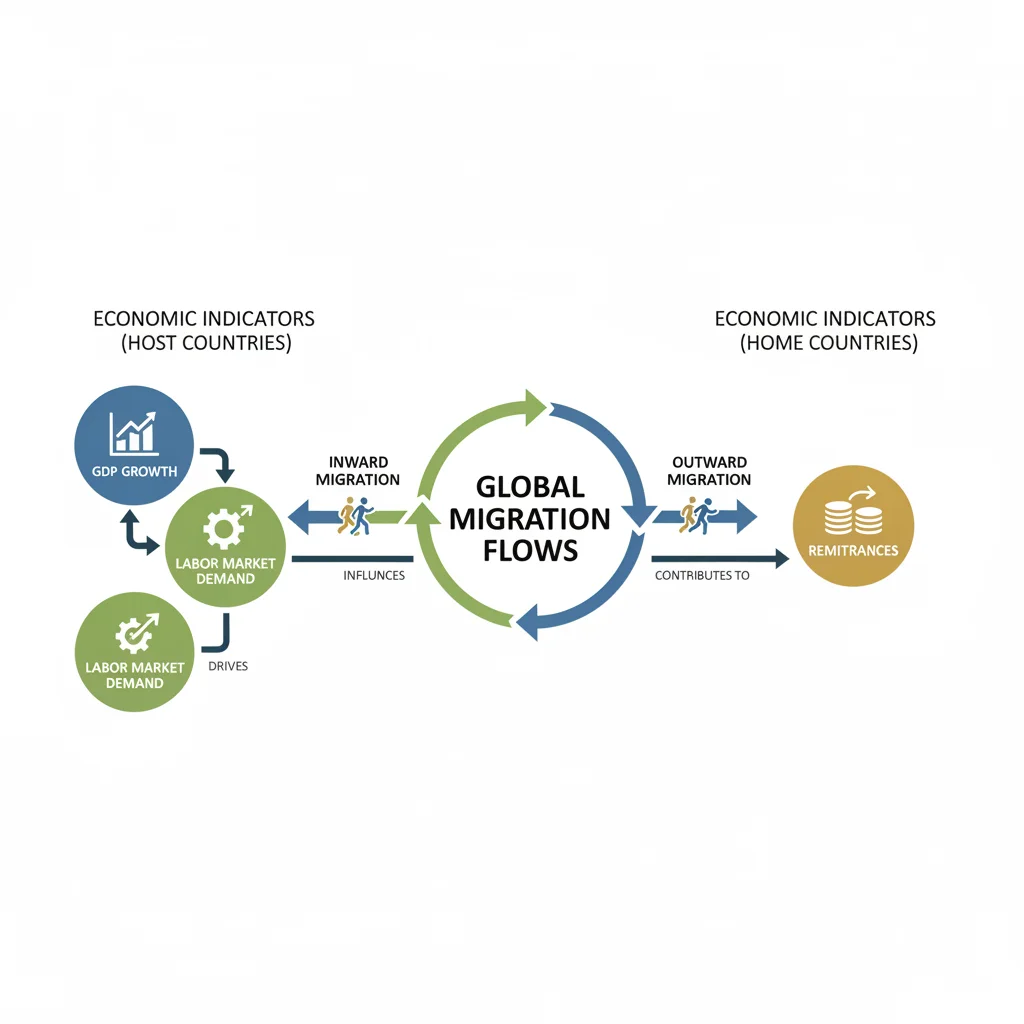
A well-managed immigration system that aligns with these global migration patterns can be a powerful engine for U.S. economic prosperity, while a chaotic or restrictive one could hinder growth and exacerbate existing challenges.
Social and Cultural Transformations
Beyond economics, migration profoundly impacts the social and cultural fabric of the U.S.:
- Diversity and Integration: Increased migration will undoubtedly enhance the diversity of American society, bringing new languages, traditions, and perspectives. The challenge lies in fostering successful integration and social cohesion.
- Public Services: Growing populations, particularly in certain regions, will place increased demand on public services such as education, healthcare, and housing, requiring strategic planning and investment.
- Identity and Belonging: Debates around national identity and belonging are likely to intensify, necessitating inclusive narratives and policies that embrace America’s multicultural reality.
- Social Cohesion: Ensuring that new arrivals and existing communities can coexist and thrive requires robust social programs, community engagement, and policies that address potential tensions.
The U.S. has a long history as a melting pot, but managing these future social transformations will require intentional effort and flexible approaches.
Geopolitical and Foreign Policy Considerations
The shifts in global migration patterns also carry significant geopolitical weight:
- International Relations: The U.S.’s immigration policies will directly impact its relationships with sending countries, particularly those affected by climate change or seeking to leverage their demographic dividend.
- Regional Stability: Unmanaged migration flows can destabilize neighboring regions, creating security challenges and humanitarian crises that may eventually spill over into U.S. interests.
- Soft Power: A humane and effective immigration system can enhance the U.S.’s global standing and soft power, attracting talent and demonstrating leadership on humanitarian issues. Conversely, restrictive or punitive policies can damage its international reputation.
- Bilateral and Multilateral Agreements: The need for international cooperation on migration management, burden-sharing, and climate adaptation will become more pressing, requiring robust diplomatic engagement.
U.S. immigration policy is not just a domestic issue; it is a critical component of its foreign policy and global engagement.
Crafting a Resilient and Responsive U.S. Immigration Policy
Given the anticipated shifts in global migration patterns, the U.S. faces a critical juncture. Relying on outdated policies or reactive measures will prove insufficient. A forward-looking, comprehensive, and adaptable immigration strategy is imperative. This strategy must be built on several pillars:
- Data-Driven Policymaking: Moving beyond anecdotal evidence and political rhetoric to base policy decisions on robust data analysis of demographic trends, labor market needs, and climate projections.
- Flexibility and Adaptability: Designing an immigration system that can respond quickly to changing global circumstances, whether it’s a sudden climate disaster or an emerging skill shortage.
- Humanitarian Compassion: Upholding international obligations and ethical principles by providing protection to those in need, particularly climate migrants, and ensuring humane treatment for all migrants.
- Economic Integration: Developing programs that facilitate the swift and effective integration of immigrants into the labor market and society, maximizing their contributions.
- International Collaboration: Strengthening partnerships with sending countries, transit nations, and international organizations to manage migration flows cooperatively, share responsibilities, and address root causes.
- Community Engagement: Fostering dialogue and understanding between immigrant communities and host communities to build social cohesion and address local concerns.
- Long-Term Planning: Shifting from short-term fixes to long-term strategic planning that considers demographic projections stretching decades into the future.
The debate around immigration in the U.S. has often been contentious, but the evolving realities of global migration patterns demand a pragmatic and forward-thinking approach. Ignoring these shifts will not make them disappear; it will only make their consequences more severe and harder to manage.
Conclusion: Embracing the Future of Global Mobility
The year 2026 will mark a pivotal moment in the history of global migration patterns. The escalating impact of climate change will drive unprecedented numbers of people from their homes, while profound demographic imbalances will create powerful new incentives for skilled and essential labor migration. These two major shifts will reshape the flow of people across continents, presenting both immense challenges and significant opportunities for nations worldwide, especially the United States.
For the U.S., understanding and proactively responding to these trends is not merely an academic exercise; it is a strategic imperative. The decisions made regarding immigration policy in the coming years will profoundly influence the nation’s economic vitality, social cohesion, and standing on the global stage. By adopting a comprehensive, adaptable, and humane approach that integrates data-driven insights with a commitment to international cooperation, the U.S. can transform these impending shifts into pathways for future prosperity and resilience.
The future of global mobility is complex and dynamic, but with foresight and thoughtful policy, the U.S. can navigate these transformative changes, ensuring that its immigration system remains a source of strength, innovation, and compassion in a rapidly changing world. The time to prepare for these new global migration patterns is now, laying the groundwork for a more stable and prosperous future for all.