Hedge Fund Strategies for Average Investors: Achieving 10% Alpha by 2026

Anúncios
In the evolving landscape of global finance, the aspiration to not just participate but to outperform the market is a goal shared by many. For the average investor, this ambition often feels like an exclusive domain of institutional giants and hedge fund moguls. However, with the right insights and a strategic approach, achieving a significant alpha – that elusive extra return above a benchmark – is not only possible but increasingly within reach. This comprehensive guide delves into actionable average investor alpha strategies, demystifying the world of hedge funds and translating their sophisticated tactics into practical solutions for you, aiming for a remarkable 10% alpha by 2026.
Anúncios
The term ‘alpha’ represents the excess return of an investment relative to the return of a benchmark index. A positive alpha indicates that the investment has performed better than its benchmark, after accounting for risk. While hedge funds are designed to generate alpha, often employing complex strategies, the core principles behind their success can be adapted. Our focus is on equipping the average investor with the tools and knowledge to apply these principles effectively, transforming their investment journey from passive participation to active alpha generation. By 2026, the financial markets are expected to present both challenges and unparalleled opportunities. Understanding how to navigate these will be crucial for sustained growth and achieving your financial objectives.
Understanding Alpha and Why It Matters for the Average Investor
Before diving into specific strategies, it’s vital to grasp what alpha truly signifies for the average investor. Alpha isn’t just about beating the market; it’s about doing so consistently, regardless of market conditions. For many, simply matching market returns through index funds is a satisfactory outcome. However, for those seeking more aggressive growth and a competitive edge, pursuing alpha is paramount. It signifies superior investment skill and the ability to identify and capitalize on mispricings or inefficiencies in the market.
Anúncios
Historically, alpha generation was the exclusive domain of highly sophisticated institutional investors with access to proprietary data, advanced algorithms, and specialized talent. The average investor was often relegated to beta (market) returns. However, the democratization of financial information, the proliferation of accessible investment platforms, and the increasing transparency of market dynamics have leveled the playing field considerably. Now, with disciplined research and a strategic mindset, an individual investor can apply principles once reserved for hedge funds to their own portfolios, aiming for that coveted average investor alpha.
The significance of alpha extends beyond mere numerical superiority. It provides a cushion during downturns, accelerates wealth accumulation during bull markets, and ultimately contributes to achieving long-term financial goals faster. A consistent 10% alpha over a few years can dramatically alter the trajectory of your investment portfolio, turning modest savings into substantial wealth. This article will guide you through the practical steps to embed alpha-seeking strategies into your investment framework for 2026 and beyond.
Deconstructing Hedge Fund Strategies for Accessibility
Hedge funds employ a vast array of complex strategies, from global macro and event-driven to long/short equity and quantitative arbitrage. While replicating these precisely might be challenging for an individual, the underlying principles are highly adaptable. The key is to distill these sophisticated approaches into manageable, actionable steps for the average investor. Our goal is to empower you to think like a hedge fund manager, but with a simplified, tailored execution.
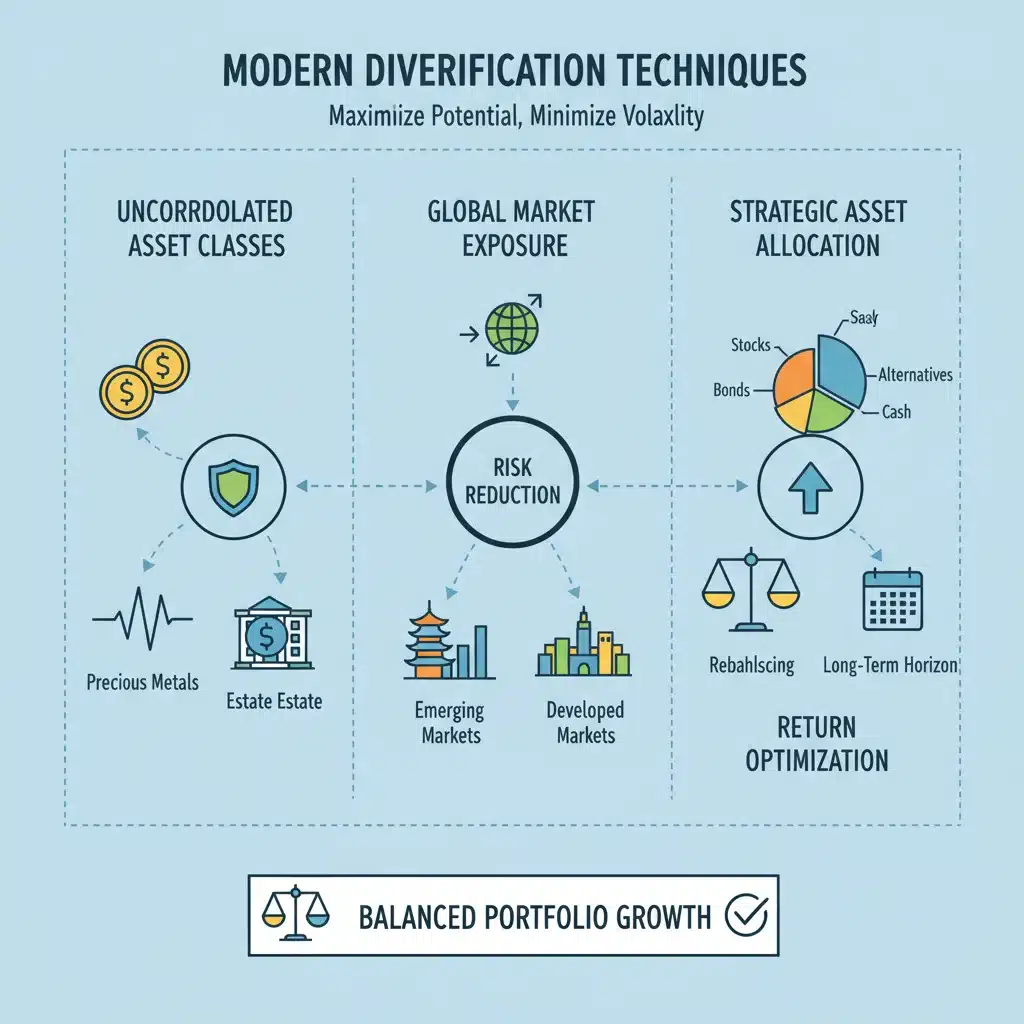
1. Diversification Beyond the Traditional: Uncorrelated Assets
Traditional diversification often means spreading investments across different sectors or geographies within stocks and bonds. Hedge funds take this a step further by seeking assets that are uncorrelated or negatively correlated with traditional markets. This means their performance doesn’t move in lockstep with the broader market, offering protection during downturns and unique growth opportunities.
- Real Estate Investment Trusts (REITs): While tied to real estate, publicly traded REITs can offer diversification and income, and their performance isn’t always perfectly correlated with the stock market.
- Commodities: Gold, silver, oil, and agricultural products can act as inflation hedges and often perform differently than stocks and bonds, especially during economic uncertainty. Accessing them through ETFs or futures can be a viable option for the average investor.
- Managed Futures: These strategies invest in futures contracts across various asset classes (commodities, currencies, bonds, equities). While traditionally complex, some ETFs and mutual funds now offer exposure to managed futures strategies, aiming for returns that are often uncorrelated with traditional equity markets.
- Alternative Lending/Peer-to-Peer Lending: Investing in loans to individuals or small businesses can provide fixed income streams that are less sensitive to stock market fluctuations. However, due diligence on platforms and borrower creditworthiness is crucial.
- Private Equity/Venture Capital (through Funds): While direct private equity is out of reach for most, some accessible funds and crowdfunding platforms allow accredited investors (and sometimes non-accredited investors with certain limits) to participate in private market opportunities, which can offer significant growth potential and low correlation with public markets.
The objective here is to build a portfolio that can weather different economic cycles, ensuring that a downturn in one asset class doesn’t decimate your entire portfolio. This approach significantly enhances the potential for consistent average investor alpha.
2. Strategic Asset Allocation and Rebalancing: Dynamic Portfolio Management
Hedge funds are not static. They constantly adjust their asset allocation based on market conditions, economic forecasts, and perceived opportunities. This dynamic approach to portfolio management is crucial for alpha generation. For the average investor, this translates into strategic rebalancing.
- Periodic Rebalancing: Instead of letting your portfolio drift, set a schedule (quarterly, semi-annually, or annually) to review and adjust your asset allocation back to your target percentages. This forces you to sell high and buy low, a fundamental principle of successful investing.
- Tactical Asset Allocation: This involves making short-term, deliberate adjustments to your asset allocation based on market outlook. For example, if you anticipate a downturn, you might temporarily increase your allocation to defensive assets like bonds or cash. If you foresee strong growth, you might lean more towards equities. This requires ongoing market monitoring but can significantly boost your average investor alpha.
- Risk Parity Approach: Instead of allocating based on capital, allocate based on risk. This means ensuring each asset class contributes equally to the overall portfolio risk. While complex, the core idea is to diversify risk, not just capital, which can lead to more stable returns.
Implementing a dynamic rebalancing strategy ensures your portfolio remains aligned with your risk tolerance and investment goals, adapting to market shifts rather than being passively subjected to them.
3. Leveraging Technology and Data: The Quant Edge
Many hedge funds employ quantitative strategies, using algorithms and vast datasets to identify trading opportunities. While you might not have access to supercomputers, readily available technology and data can give the average investor a significant edge.
- Screeners and Analytics Tools: Utilize online stock screeners, financial news platforms, and investment research websites to filter for specific criteria (e.g., low P/E ratios, high dividend yields, strong growth prospects). Many brokerage platforms offer advanced analytical tools.
- Backtesting: Some platforms allow you to backtest investment strategies against historical data, helping you understand how a particular approach might have performed in the past. This provides valuable insights into potential future performance.
- Automated Investing Platforms (Robo-Advisors): These platforms use algorithms to build and manage diversified portfolios based on your risk tolerance and goals. While primarily focused on passive investing, some offer more sophisticated rebalancing and tax-loss harvesting features that can contribute to alpha.
- Learning Algorithmic Trading Basics: For those with a programming inclination, open-source libraries and platforms can facilitate learning basic algorithmic trading, allowing for automated execution of simple strategies.
Embracing technology can help you make more informed, data-driven decisions, reducing emotional biases and enhancing your ability to generate average investor alpha.
Risk Management: The Hedge Fund Imperative
A crucial, often overlooked, aspect of hedge fund success is their rigorous approach to risk management. They don’t just focus on returns; they prioritize protecting capital. For the average investor, this means understanding and mitigating various forms of risk.
1. Position Sizing and Capital Allocation: Don’t Bet the Farm
Hedge funds meticulously manage the size of each investment relative to their total capital. This prevents any single position from having an outsized negative impact on the portfolio. For the average investor:
- Set Maximum Position Limits: Decide on a maximum percentage of your total portfolio that any single stock or asset class can occupy (e.g., no more than 5% in one stock, 20% in one sector).
- Understand Concentration Risk: While concentrated portfolios can lead to higher returns if successful, they also carry significantly higher risk. A diversified approach with sensible position sizing is key for consistent alpha.
2. Stop-Loss Orders and Hedging Techniques: Protecting Your Downside
Hedge funds use various instruments to hedge against downside risk. While complex derivatives might be beyond the scope of most average investors, simpler techniques are available.
- Stop-Loss Orders: For individual stock positions, setting stop-loss orders can automatically limit your losses if a stock falls below a certain price. This is a simple yet effective risk management tool.
- Portfolio Hedging with ETFs: Consider using inverse ETFs (which aim to profit from market declines) or put options on broad market indices to hedge a portion of your equity portfolio during periods of high market uncertainty. These should be used cautiously and with a clear understanding of their mechanics.
- Cash as a Hedge: During highly volatile or uncertain periods, holding a higher percentage of cash can act as a natural hedge, preserving capital and providing liquidity to buy assets at lower prices.
3. Continuous Monitoring and Scenario Planning: Adaptability is Key
Hedge funds constantly monitor market conditions, economic indicators, and geopolitical events, and they plan for various scenarios. The average investor should adopt a similar proactive mindset.
- Stay Informed: Regularly read reputable financial news, economic reports, and market analyses. Understand global trends and their potential impact on your investments.
- Review Your Thesis: For each significant investment, have a clear investment thesis. Regularly review whether the original reasons for investing still hold true. Be willing to adjust or exit positions if the fundamentals change.
- Stress Testing Your Portfolio: Mentally (or with simple tools) consider how your portfolio might perform under different adverse scenarios (e.g., a major market crash, a recession, a specific sector downturn). This helps identify vulnerabilities.
Robust risk management isn’t about avoiding all risk, but about understanding and intelligently mitigating it to protect your capital and ensure your alpha-seeking strategies can thrive.
Advanced Alpha Generation Techniques for the Average Investor
Beyond the foundational strategies, there are more nuanced approaches that, with careful consideration, can further enhance your pursuit of average investor alpha.
1. Factor Investing: Beyond Market Beta
Factor investing involves targeting specific characteristics or ‘factors’ that have historically been associated with higher returns or lower risk. These factors include value, size, momentum, quality, and low volatility. While hedge funds might construct complex factor portfolios, average investors can access these through factor-based ETFs or mutual funds.
- Value Factor: Investing in stocks that appear undervalued relative to their intrinsic worth.
- Momentum Factor: Investing in stocks that have shown strong recent performance, assuming this trend will continue.
- Quality Factor: Investing in companies with strong balance sheets, stable earnings, and high returns on equity.
- Low Volatility Factor: Investing in stocks that have historically exhibited lower price fluctuations, offering a defensive tilt.
By strategically allocating to these factors, you can potentially capture additional sources of return that go beyond simple market exposure.

2. Global Macro Insights: Thinking Like a Macro Investor
Global macro hedge funds make investment decisions based on broad economic and political trends. While executing complex global macro trades might be difficult, understanding these trends can inform your asset allocation decisions.
- Interest Rate Trends: Higher rates might favor value stocks and could impact bond prices. Lower rates might boost growth stocks.
- Currency Movements: Stronger or weaker currencies can impact international investments and commodity prices.
- Geopolitical Events: Major political shifts, trade wars, or conflicts can create opportunities or risks in specific markets.
- Demographic Shifts: Aging populations, urbanization, and technological adoption create long-term investment themes.
Integrating a global macro perspective into your research helps you anticipate market movements and position your portfolio strategically for enhanced average investor alpha.
3. Behavioral Finance Awareness: Overcoming Cognitive Biases
Many hedge fund managers are acutely aware of behavioral biases that affect investor decision-making. By understanding common biases, the average investor can avoid costly mistakes and make more rational choices.
- Confirmation Bias: The tendency to seek out information that confirms existing beliefs. Actively seek disconfirming evidence.
- Loss Aversion: The tendency to feel the pain of losses more strongly than the pleasure of gains, leading to holding onto losing stocks too long. Set clear exit strategies.
- Herd Mentality: The tendency to follow the crowd. Develop independent research and conviction.
- Anchoring: Over-relying on the first piece of information encountered. Consider a wide range of data.
Becoming aware of these biases and developing a disciplined investment process can significantly improve decision-making and contribute to superior returns.
Building Your 10% Alpha Portfolio by 2026: A Practical Roadmap
Achieving a 10% alpha by 2026 is an ambitious but attainable goal for the average investor who commits to a disciplined and strategic approach. Here’s a roadmap to integrate these hedge fund-inspired strategies into your own investment plan:
Step 1: Assess Your Current Portfolio and Goals
- Current State: Understand your existing asset allocation, risk exposure, and performance relative to benchmarks.
- Define Alpha Goal: Clearly articulate what a 10% alpha means for your specific portfolio size and timeframe.
- Risk Tolerance: Re-evaluate your personal risk tolerance. Alpha-seeking strategies often involve a higher degree of active management and potentially higher risk.
Step 2: Educate and Empower Yourself
- Continuous Learning: Commit to ongoing financial education. Read books, attend webinars, and follow reputable financial news sources.
- Utilize Tools: Become proficient with investment screening tools, analytical platforms, and portfolio trackers.
Step 3: Implement Diversification and Uncorrelated Assets
- Expand Horizons: Gradually introduce uncorrelated assets like REITs, commodities (via ETFs), or managed futures funds into your portfolio.
- Global Exposure: Ensure your portfolio has adequate exposure to international markets, both developed and emerging.
Step 4: Adopt Dynamic Asset Allocation and Rebalancing
- Set a Schedule: Establish a regular schedule for reviewing and rebalancing your portfolio (e.g., quarterly).
- Tactical Adjustments: Be prepared to make tactical shifts based on your market outlook, but avoid impulsive decisions.
Step 5: Master Risk Management Techniques
- Position Sizing: Implement strict rules for position sizing to prevent overconcentration.
- Downside Protection: Consider using stop-loss orders for individual stocks and exploring simple hedging strategies for broader market exposure during volatile times.
Step 6: Explore Advanced Alpha Factors
- Factor ETFs: Investigate factor-based ETFs (value, momentum, quality, low volatility) to gain exposure to proven alpha sources.
- Thematic Investing: Identify long-term structural trends (e.g., AI, renewable energy, aging population) and invest in companies poised to benefit from them.
Step 7: Maintain Discipline and Emotional Control
- Stick to Your Plan: Avoid chasing fads or making emotional decisions during market volatility.
- Regular Review: Periodically review your investment performance, learn from mistakes, and refine your strategies.
The Future of Average Investor Alpha in 2026
As we look towards 2026, the financial landscape will continue to evolve, presenting new challenges and opportunities for generating average investor alpha. Technological advancements, particularly in AI and machine learning, will likely make sophisticated analytical tools even more accessible. The rise of decentralized finance (DeFi) and digital assets could also open new avenues for uncorrelated returns, albeit with higher inherent risks.
Staying agile, continuously learning, and adapting your strategies will be paramount. The goal isn’t just to mimic hedge funds but to integrate their core principles of rigorous research, disciplined risk management, and proactive portfolio adjustment into your personalized investment framework. By focusing on these practical solutions, the average investor can confidently aim for and potentially achieve that ambitious 10% alpha by 2026, transforming their financial future.
The journey to consistent alpha generation is not a sprint but a marathon. It requires patience, persistence, and a commitment to continuous improvement. But by adopting these hedge fund-inspired strategies, the average investor can indeed bridge the gap, taking control of their financial destiny and unlocking superior returns in the years to come.