2026 Tax Law Changes: Maximize Investor Returns

Anúncios
Navigating the 2026 Tax Law Changes: 3 Key Strategies for US Investors to Maximize Returns
The financial landscape for US investors is perpetually in motion, and few events trigger as much strategic re-evaluation as impending tax law changes. As we approach 2026, a significant shift in tax legislation is on the horizon, promising to reshape how individuals and entities manage their investments and ultimately, their wealth. Understanding these 2026 tax law changes is not merely an exercise in compliance; it’s an imperative for savvy investors aiming to optimize their portfolios and maximize returns.
The Tax Cuts and Jobs Act (TCJA) of 2017 brought about a sweeping overhaul of the US tax code, introducing a host of provisions that impacted everything from individual income tax rates to corporate taxation and estate planning. While many of these provisions were permanent, several key aspects – particularly those affecting individual taxpayers – are set to expire at the end of 2025. This expiration will usher in the 2026 tax law changes, potentially reverting to pre-TCJA rules or introducing entirely new frameworks.
Anúncios
For US investors, this means a critical window of opportunity – and potential challenge – to re-evaluate existing strategies and implement new ones. The impact could be felt across various asset classes, from stocks and bonds to real estate and alternative investments. Capital gains, ordinary income, deductions, and estate taxes could all see significant adjustments, demanding a proactive and informed approach.
This comprehensive guide delves into the anticipated 2026 tax law changes and, more importantly, outlines three pivotal strategies that US investors can employ to not only mitigate potential negative impacts but also to capitalize on the new environment, ensuring their financial future remains robust and their returns maximized.
Anúncios
Understanding the Landscape: What to Expect from the 2026 Tax Law Changes
Before diving into specific strategies, it’s essential to grasp the potential scope of the 2026 tax law changes. While the exact details will depend on legislative actions in the coming months, several key areas are widely anticipated to be affected:
Individual Income Tax Rates
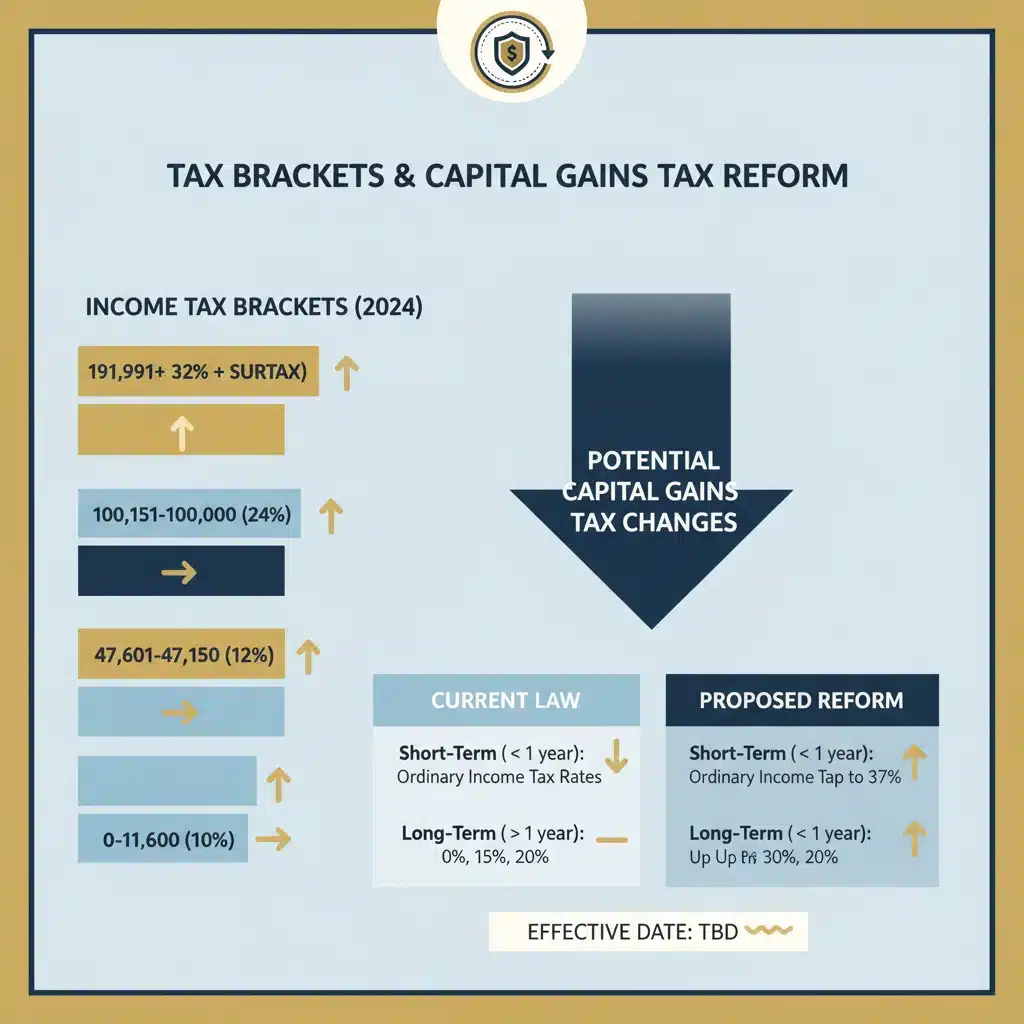
The most immediate and widespread impact for many investors will likely come from changes to individual income tax rates. Under the TCJA, tax rates were generally lowered across most income brackets. Without new legislation, these rates are scheduled to revert to their higher pre-TCJA levels. This could mean a significant increase in the tax bite on investment income, including interest, dividends, and short-term capital gains.
For high-income earners, the top marginal tax rate could climb, impacting how they structure their investments and withdraw funds in retirement. Understanding your current and projected tax bracket under the potential new rules is fundamental to effective tax planning.
Capital Gains and Qualified Dividends
While the TCJA did not directly alter capital gains tax rates, these rates are often tied to ordinary income tax brackets. If ordinary income tax rates increase, there could be indirect pressure or legislative proposals to also adjust long-term capital gains and qualified dividend rates. Even if the rates themselves remain unchanged, an increase in ordinary income tax rates could make tax-efficient investment vehicles – such as those generating long-term capital gains – even more attractive.
Investors need to pay close attention to the holding periods of their assets. Long-term capital gains (assets held for more than one year) are generally taxed at more favorable rates than short-term gains (assets held for one year or less), which are taxed at ordinary income rates. The distinction becomes even more critical if ordinary income rates rise.
Standard Deduction and Itemized Deductions
The TCJA significantly increased the standard deduction, leading many taxpayers to no longer itemize. If the standard deduction reverts to lower pre-TCJA levels, more taxpayers might find it advantageous to itemize deductions again. This could influence investment decisions related to charitable contributions (e.g., donor-advised funds), mortgage interest, and state and local taxes (SALT) – though the SALT deduction cap remains a contentious issue that could see further legislative action.
Estate and Gift Taxes
One of the most impactful provisions of the TCJA for wealthy individuals was the dramatic increase in the estate and gift tax exemption amount. This amount is also scheduled to revert to its pre-TCJA level (adjusted for inflation) in 2026. This means a substantially lower exemption, potentially subjecting more estates to federal estate tax. For high-net-worth investors, proactive estate planning becomes paramount to mitigate potential tax liabilities and ensure wealth transfer efficiency.
Other Notable Areas
- Alternative Minimum Tax (AMT): The TCJA significantly curtailed the reach of the AMT. Its potential re-expansion or adjustments could impact high-income investors.
- Section 199A Qualified Business Income (QBI) Deduction: This deduction for pass-through entities is also set to expire, which could affect owners of small businesses and partnerships.
- Education and Retirement Account Provisions: While less likely to see wholesale changes, some deductions or contribution limits related to education savings (e.g., 529 plans) or retirement accounts (e.g., IRAs, 401(k)s) could be debated.
The uncertainty surrounding these 2026 tax law changes underscores the need for continuous monitoring and flexible planning. Investors who wait until the last minute risk missing valuable opportunities or incurring unnecessary tax burdens.
Strategy 1: Proactive Portfolio Rebalancing and Asset Location Optimization
One of the most effective ways to prepare for the 2026 tax law changes is to proactively rebalance your investment portfolio and optimize your asset location strategy. This involves not just adjusting your asset allocation (the mix of stocks, bonds, and other investments) but also strategically deciding where to hold different types of assets across various account types (taxable, tax-deferred, and tax-exempt).
The Importance of Asset Location
Asset location is a tax-centric strategy that aims to place investments in the most tax-efficient accounts. The principle is simple: put investments with higher ordinary income tax potential (e.g., high-dividend stocks, actively managed bond funds, REITs) in tax-deferred accounts (like 401(k)s or traditional IRAs) or tax-exempt accounts (like Roth IRAs). Conversely, place investments that generate long-term capital gains (e.g., growth stocks, ETFs) or are tax-inefficient in taxable brokerage accounts.
- Taxable Accounts: Best for investments that generate qualified dividends or long-term capital gains, as these are typically taxed at lower rates. Tax-efficient ETFs are also good candidates.
- Tax-Deferred Accounts (401(k), Traditional IRA): Ideal for investments that generate ordinary income, such as bonds, REITs, or actively managed funds with high turnover. Taxes are deferred until withdrawal, allowing for tax-free growth.
- Tax-Exempt Accounts (Roth IRA, Roth 401(k)): Excellent for high-growth investments, as all qualified withdrawals in retirement are tax-free. This is particularly powerful if you expect to be in a higher tax bracket in retirement.
With potential increases in ordinary income tax rates and possibly capital gains rates under the 2026 tax law changes, optimizing asset location becomes even more critical. Review your current holdings and consider making adjustments before the end of 2025 to lock in current tax treatment where beneficial or prepare for future changes.
Tax-Loss Harvesting Opportunities
Leading up to 2026, consider utilizing tax-loss harvesting. This strategy involves selling investments at a loss to offset capital gains and potentially a limited amount of ordinary income. If you anticipate higher capital gains tax rates in the future, realizing losses now can be a powerful tool.
For example, if you have investments that have performed poorly, selling them at a loss can offset any capital gains you’ve realized from other investments. If your capital losses exceed your capital gains, you can deduct up to $3,000 of those losses against your ordinary income, carrying forward any remaining losses to future tax years. This can be particularly advantageous in years leading up to significant tax changes.
Evaluating Investment Vehicles
Re-evaluate the tax efficiency of your chosen investment vehicles. For instance, mutual funds can sometimes be less tax-efficient than Exchange Traded Funds (ETFs) due to the way they manage capital gains distributions. If ordinary income or capital gains rates increase, switching to more tax-efficient ETFs or individual stocks might be a prudent move.
Consider municipal bonds, which offer tax-exempt interest income at the federal level and often at the state and local levels if you live in the issuing state. These can become increasingly attractive if income tax rates rise.
Strategy 2: Strategic Use of Retirement and Advanced Estate Planning Tools
The 2026 tax law changes are expected to have a profound impact on retirement planning and wealth transfer, particularly with the anticipated reduction in the estate and gift tax exemption. Proactive engagement with these areas can yield substantial tax savings and provide greater financial security.
Maximizing Retirement Contributions and Conversions
If income tax rates are poised to increase in 2026, now might be an opportune time to accelerate contributions to tax-deferred retirement accounts (like 401(k)s and traditional IRAs) or consider Roth conversions. The logic is simple: pay taxes now at potentially lower current rates on a Roth conversion, rather than paying potentially higher rates on withdrawals from a traditional account in retirement.
- Roth Conversions: Converting a traditional IRA to a Roth IRA involves paying income tax on the converted amount in the year of conversion. If you believe your tax bracket will be higher in retirement, or if current tax rates are historically low compared to future projections, a Roth conversion could be highly beneficial. This strategy is particularly powerful for younger investors or those currently in a lower-than-usual income year.
- Maxing Out Contributions: Ensure you are maximizing contributions to all available retirement accounts, including 401(k)s, 403(b)s, IRAs, and HSAs (Health Savings Accounts). HSAs offer a triple tax advantage: tax-deductible contributions, tax-free growth, and tax-free withdrawals for qualified medical expenses. These vehicles grow tax-deferred or tax-free, shielding your investments from annual taxation and allowing for greater compounding.
- Backdoor Roth: For high-income earners who exceed the income limits for direct Roth IRA contributions, the "backdoor Roth" strategy remains a viable option. This involves contributing to a non-deductible traditional IRA and then immediately converting it to a Roth IRA.
The window of opportunity for these strategies may narrow as 2026 approaches, making early action crucial.
Advanced Estate Planning for High-Net-Worth Individuals
The likely reduction in the estate and gift tax exemption amount in 2026 is a critical consideration for wealthy investors. If the exemption reverts to its pre-TCJA level (approximately $6 million to $7 million per individual, adjusted for inflation), many more estates will become subject to federal estate tax.
This necessitates a review and potential update of existing estate plans. Strategies to consider include:
- Gifting: Utilize the current higher gift tax exemption before it potentially decreases. You can gift assets up to the current exemption amount without incurring gift tax, effectively removing those assets from your taxable estate. This could involve direct gifts to beneficiaries or contributions to trusts.
- Irrevocable Trusts: Establish irrevocable trusts (e.g., Irrevocable Life Insurance Trusts, Grantor Retained Annuity Trusts) to remove assets from your taxable estate. These trusts, once established and funded, generally cannot be altered, but they provide significant estate tax benefits.
- Family Limited Partnerships (FLPs) and Limited Liability Companies (LLCs): These entities can be used for transferring wealth to future generations at discounted values for estate and gift tax purposes, while allowing the grantor to retain some control.
- Charitable Giving: Consider strategies like Charitable Remainder Trusts (CRTs) or Charitable Lead Trusts (CLTs) to achieve philanthropic goals while also reducing estate and income tax liabilities. Donor-advised funds (DAFs) also offer flexibility for charitable contributions.
Consulting with an estate planning attorney and a financial advisor specializing in wealth transfer is essential for navigating these complex strategies and ensuring compliance with all regulations.
Strategy 3: Diversification Beyond Traditional Assets and International Considerations
While the first two strategies focus on optimizing existing portfolios and planning for wealth transfer, the third strategy broadens the scope to consider diversifying beyond traditional asset classes and exploring international investment opportunities, especially in light of the 2026 tax law changes.
Exploring Alternative Investments
As traditional investment income and capital gains face potential tax increases, alternative investments might offer different tax treatments or uncorrelated returns that become more attractive. These can include:
- Real Estate: Direct real estate investments, particularly those that generate depreciation deductions, can offer significant tax advantages. Real estate can provide rental income, appreciation, and potential for tax deferral through 1031 exchanges (though these have faced scrutiny in past tax reform discussions).
- Private Equity/Venture Capital: For accredited investors, these private market investments can offer different return profiles and tax implications compared to publicly traded securities. Their illiquidity often means longer holding periods, potentially qualifying for long-term capital gains if realized.
- Commodities and Precious Metals: While their tax treatment can be complex, commodities can act as an inflation hedge and may offer diversification benefits.
- Hedge Funds: These often employ complex strategies that can have varied tax implications, sometimes offering tax-efficient structures depending on the fund.
It’s crucial to understand the specific tax treatment of each alternative investment and how it aligns with your overall tax strategy under the anticipated 2026 tax law changes. Many alternative investments come with higher fees, illiquidity, and complexity, so thorough due diligence is paramount.
International Diversification and Tax Treaties
For sophisticated investors, looking beyond US borders can offer both diversification benefits and potential tax advantages. Investing in international markets can expose your portfolio to different economic cycles and growth drivers, potentially mitigating risks associated with a concentrated domestic portfolio.
When investing internationally, understanding tax treaties between the US and other countries is vital. These treaties are designed to prevent double taxation on income earned abroad. For example, dividends or interest earned from foreign companies might be subject to withholding taxes in the source country, but a tax treaty could allow you to claim a foreign tax credit on your US tax return, reducing your overall tax burden.
Consider investments in:
- Foreign Stocks and ETFs: These can provide exposure to global markets. Be mindful of foreign withholding taxes on dividends.
- Global Real Estate: Investing in real estate outside the US can offer unique opportunities, but also introduces currency risk and different property tax regimes.
- International Bonds: These can provide diversification from US fixed income and potentially higher yields, but also carry currency and geopolitical risks.
Navigating international taxation can be complex. Working with a tax advisor experienced in international tax law is highly recommended to ensure compliance and optimize tax efficiency for global investments, especially as 2026 tax law changes might indirectly influence the attractiveness of foreign tax credits or the tax treatment of foreign-sourced income.

The Imperative of Professional Guidance
The impending 2026 tax law changes are not just a minor adjustment; they represent a significant juncture for US investors. The complexity of these changes, coupled with their potential impact on individual financial situations, underscores the critical need for professional guidance.
A qualified financial advisor and tax professional can provide invaluable assistance in several ways:
- Personalized Analysis: They can assess your specific financial situation, investment portfolio, and long-term goals to determine how the 2026 tax law changes will specifically affect you.
- Strategic Planning: They can help you craft a tailored strategy incorporating the approaches discussed above – asset location, retirement planning, estate planning, and diversification – to optimize your tax position and maximize returns.
- Stay Updated: Tax laws are dynamic. Professionals stay abreast of legislative developments, ensuring your plan remains current and compliant. They can alert you to new opportunities or risks as details of the 2026 tax law changes become clearer.
- Execution: Implementing complex tax strategies often involves detailed calculations, paperwork, and adherence to specific deadlines. Advisors can guide you through the execution process.
- Holistic View: A good advisor considers your entire financial picture, including investments, insurance, retirement, and estate planning, to create a cohesive and tax-efficient strategy.
Attempting to navigate these changes alone can lead to missed opportunities or costly errors. The investment in professional advice can often be recouped many times over through tax savings and enhanced investment performance.
Conclusion: Proactivity is Key to Thriving Amidst 2026 Tax Law Changes
The 2026 tax law changes are not a distant threat but a tangible reality that demands immediate attention from US investors. While the final legislative landscape remains somewhat fluid, the core components of the Tax Cuts and Jobs Act’s individual provisions are set to expire, creating a strong likelihood of higher tax rates across various income and investment categories.
By adopting a proactive stance, investors can transform potential challenges into opportunities. The three key strategies – proactive portfolio rebalancing and asset location optimization, strategic use of retirement and advanced estate planning tools, and diversification beyond traditional assets with international considerations – provide a robust framework for navigating this evolving environment.
Remember, the goal is not merely to minimize taxes but to maximize after-tax returns and preserve wealth for future generations. This requires a comprehensive understanding of your financial situation, a forward-looking perspective on tax legislation, and often, the skilled guidance of financial and tax professionals.
Don’t wait until 2026 arrives to react. Start reviewing your portfolio, consulting your advisors, and making strategic adjustments now. The investors who are best prepared for the 2026 tax law changes will be those who embrace proactive planning, ensuring their financial strategies are resilient, adaptive, and ultimately, geared towards long-term success.