2025 Outlook: Small-Cap Stocks Growth & Risk Management

Anúncios
The 2025 outlook for small-cap stocks presents a nuanced opportunity for investors to identify high-growth potential while meticulously managing inherent risks over a 12-month investment horizon amid evolving market dynamics.
Anúncios
As we approach 2025, the landscape for small-cap stocks is generating considerable discussion among investors. Understanding the 2025 outlook for small-cap stocks is crucial for those looking to capitalize on potential growth while navigating the inherent volatility these companies often present. This article delves into the key factors shaping their performance, offering insights into both the opportunities and the essential risk management strategies for the coming year.
Understanding Small-Cap Stocks: Definition and Market Context
Small-cap stocks, typically defined as companies with a market capitalization between $300 million and $2 billion, often represent the engine of innovation and future growth in an economy. These firms are generally younger, more agile, and possess significant potential for rapid expansion compared to their larger, more established counterparts. Their size, however, also exposes them to greater market fluctuations and specific operational challenges.
Anúncios
The market context for small-caps in 2025 is shaped by a confluence of macroeconomic trends, technological advancements, and shifting investor sentiment. Historically, small-caps tend to outperform larger companies during periods of economic expansion, as their growth trajectories are less constrained by market saturation. Conversely, they can be more susceptible to downturns due to limited resources and less diversified revenue streams. A deep understanding of these foundational characteristics is vital before diving into specific investment decisions.
The Unique Appeal of Small-Cap Investments
Investing in small-caps offers a distinct set of advantages that attract patient and risk-tolerant investors. Their potential for outsized returns stems from their capacity to innovate and capture market share quickly. Many small-cap companies operate in niche markets or emerging industries, allowing them to grow unburdened by legacy systems or intense competition from established giants.
- High Growth Potential: Small companies can achieve significant percentage growth rates from a smaller revenue base.
- Innovation and Agility: Often at the forefront of new technologies and business models, adapting quickly to market changes.
- Acquisition Targets: Successful small-caps can become attractive acquisition targets for larger corporations, leading to significant premiums for shareholders.
- Undervalued Opportunities: Less analyst coverage means potential for discovering overlooked gems.
Despite these compelling upsides, the smaller scale of these businesses also means they might lack the financial resilience of large-caps, making thorough due diligence paramount. Their reliance on specific market conditions or a few key products can amplify both positive and negative developments. Therefore, a balanced perspective that acknowledges both the opportunities and the inherent challenges is essential when considering small-cap exposure.
Key Economic Drivers for Small-Cap Performance in 2025
The economic environment in 2025 will play a pivotal role in shaping the performance of small-cap stocks. Several key drivers, ranging from interest rates and inflation to consumer spending and technological shifts, will influence their growth trajectory and overall market sentiment. Understanding these macroeconomic forces is critical for investors seeking to position themselves strategically.
Anticipated interest rate movements by the Federal Reserve will significantly impact small-cap financing costs. Higher rates can increase borrowing expenses, potentially stifling growth for companies relying on debt for expansion. Conversely, a stable or declining rate environment could provide a tailwind, making capital more accessible and affordable. Inflation, too, presents a dual challenge: while some small-caps might benefit from pricing power in certain sectors, others could struggle with rising input costs and reduced consumer purchasing power.
Inflationary Pressures and Interest Rate Environment
Inflationary pressures, whether persistent or easing, will dictate the operational costs and profitability of small businesses. Companies with strong pricing power or efficient supply chains might weather these conditions better. The Federal Reserve’s response to inflation, particularly concerning interest rate adjustments, will directly influence the cost of capital for small-caps, which are often more reliant on external financing than their larger counterparts.
- Impact of Higher Rates: Increased cost of borrowing, potentially slowing expansion plans and reducing profitability.
- Inflation’s Dual Effect: Can boost revenues for firms with pricing power but squeeze margins for others.
- Monetary Policy Sensitivity: Small-caps tend to be more sensitive to changes in monetary policy due to their growth-oriented nature.
The interplay between inflation and interest rates will be a defining characteristic of the 2025 economic landscape. Investors should closely monitor central bank communications and economic data to gauge the likely direction of these critical factors, as they will directly translate into either headwinds or tailwinds for small-cap performance.
Sector-Specific Opportunities and Headwinds
While the broader economic environment sets the stage, specific sectors within the small-cap universe will present unique opportunities and face distinct headwinds in 2025. Identifying these sector-specific dynamics is paramount for investors looking to pinpoint the most promising growth areas and avoid potential pitfalls. Not all small-caps will perform equally, and a granular analysis is essential.
Technology and healthcare sectors, for instance, are often fertile ground for small-cap innovation. Companies developing cutting-edge software, biotech solutions, or medical devices can experience explosive growth if their products gain traction. However, these sectors also come with high research and development costs, regulatory hurdles, and intense competition. On the other hand, traditional sectors like manufacturing or retail might see slower, but more stable, growth, influenced heavily by consumer spending trends and supply chain resilience.
Emerging Technologies and Innovation
The continued advancement of artificial intelligence, renewable energy, and biotechnology will create significant opportunities for small-cap companies at the forefront of these innovations. Many smaller firms are agile enough to quickly adopt and commercialize new technologies, becoming disruptive forces in their respective industries. Investors should look for companies with strong intellectual property, clear market differentiation, and scalable business models.
- AI and Automation: Small-caps developing specialized AI applications or automation tools for niche markets.
- Green Energy Solutions: Companies focused on solar, wind, and battery storage technologies.
- Biotech and MedTech: Firms with promising drug candidates or innovative medical devices addressing unmet needs.
Conversely, sectors heavily reliant on discretionary consumer spending could face headwinds if economic growth slows or inflation erodes purchasing power. Geopolitical events and supply chain disruptions could also disproportionately affect small-caps with less diversified operations. Therefore, a careful assessment of both growth catalysts and potential risks within each sector is crucial for successful small-cap investing.
Risk Management Strategies for Small-Cap Investments
Investing in small-cap stocks, while offering substantial upside, inherently carries higher risks compared to large-cap investments. Their volatility, sensitivity to economic shifts, and limited financial resources necessitate robust risk management strategies. For investors venturing into this segment in 2025, a proactive and disciplined approach to mitigating these risks is not just advisable, but essential for preserving capital and optimizing returns.
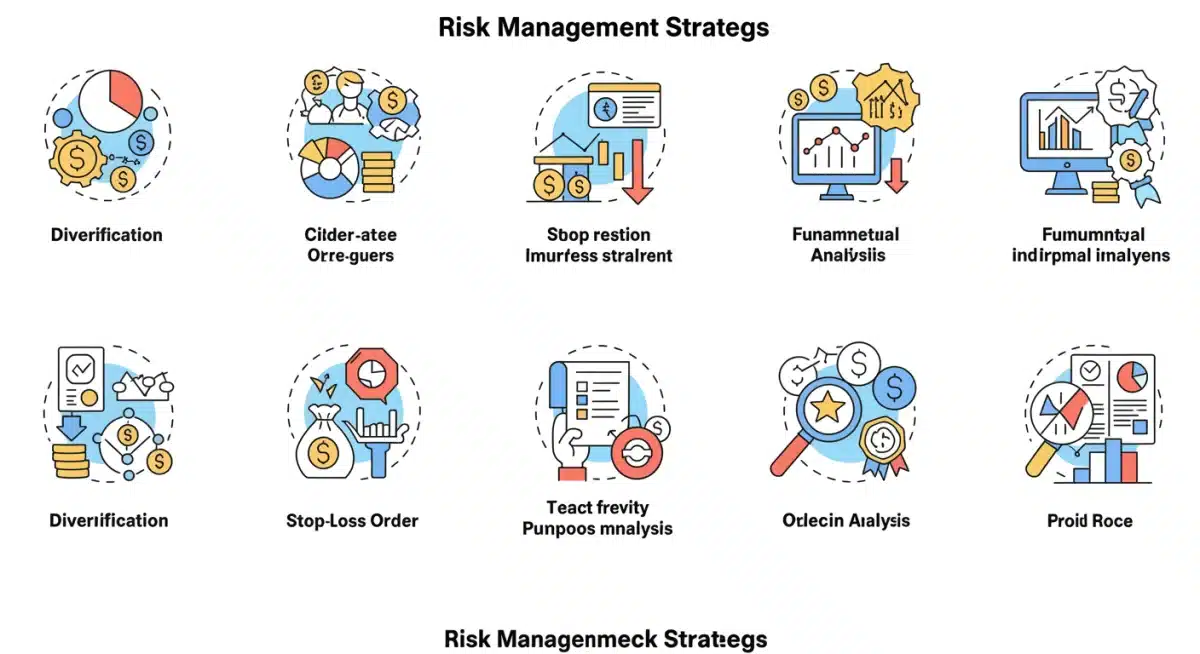
Diversification is perhaps the most fundamental risk management tool. Spreading investments across multiple small-cap companies, and even across different sectors, can cushion the impact of a single underperforming stock. Furthermore, conducting thorough due diligence is paramount. This involves not just analyzing financial statements, but also understanding the company’s business model, competitive landscape, management team, and growth prospects. Relying solely on market sentiment without deep fundamental analysis can expose investors to unnecessary risks.
Diversification and Due Diligence
Effective diversification goes beyond simply owning multiple small-cap stocks. It involves carefully selecting companies from different industries, geographies, and with varying market drivers to minimize correlation. Complementing this, rigorous due diligence helps investors uncover the true value and potential risks of individual companies.
- Sector Diversification: Avoid overconcentration in a single sector, even if it appears promising.
- Geographic Diversification: Consider small-caps in different regions if applicable to your investment strategy.
- Fundamental Analysis: Evaluate financial health, management quality, competitive advantages, and growth catalysts.
- Valuation Metrics: Assess whether the stock’s price accurately reflects its intrinsic value and growth potential.
Another critical strategy involves setting clear entry and exit points, often through stop-loss orders, to limit potential losses. Small-caps can experience sharp price movements, and having a predefined tolerance for risk can prevent emotional decision-making during periods of high volatility. Regular portfolio reviews are also essential to ensure that investment theses remain valid and that exposure to any single risk factor does not become excessive.
Leveraging Analytics and Expert Insights
In the dynamic world of small-cap investing, staying informed and leveraging advanced analytics can provide a significant edge. The sheer volume of information available, coupled with the often-limited analyst coverage of smaller companies, makes it challenging for individual investors to keep pace. Therefore, utilizing technological tools and expert insights becomes crucial for making well-informed decisions and identifying promising opportunities within the small-cap stocks 2025 landscape.
Sophisticated data analytics platforms can help process vast amounts of financial data, identify trends, and even flag potential red flags that might be missed by manual review. These tools can sift through financial reports, news sentiment, and social media discussions to provide a more comprehensive picture of a company’s health and market perception. Furthermore, following reputable financial analysts and subscribing to specialized research on small-cap markets can offer valuable perspectives and uncover hidden gems.
Utilizing Data-Driven Investment Tools
Modern investment tools offer capabilities far beyond traditional screening. They can analyze qualitative data, predict market movements based on historical patterns, and even perform comparative analyses across various small-cap companies. Such tools empower investors to make more objective and data-backed decisions.
- AI-Powered Screeners: Identify small-caps based on specific growth metrics, valuation, or innovation criteria.
- Sentiment Analysis: Gauge public and investor sentiment towards specific companies or sectors.
- Predictive Analytics: Forecast potential price movements or identify companies with high probability of outperformance.
However, it’s important to remember that no tool or expert insight is infallible. Investors should use these resources as aids to their own independent research, rather than as definitive guides. A balanced approach that combines sophisticated analytics with a fundamental understanding of the companies and the broader market dynamics will yield the most robust investment strategies. The goal is to enhance decision-making, not replace critical thinking.
Long-Term Perspective vs. Short-Term Volatility
Investing in small-cap stocks often requires a dual perspective: acknowledging their inherent short-term volatility while maintaining a long-term outlook. The nature of smaller companies, with their growth-oriented business models and sensitivity to market sentiment, means their stock prices can experience significant swings over short periods. However, it is over longer horizons that their true growth potential typically materializes, rewarding patient investors.
Short-term market noise, such as quarterly earnings misses, minor economic data fluctuations, or even geopolitical headlines, can cause disproportionate reactions in small-cap stock prices. These movements, while unsettling, often do not reflect the underlying fundamental health or long-term prospects of a well-managed, innovative company. Investors focused solely on these daily or weekly fluctuations risk making emotional decisions that can undermine their overall investment strategy.
Enduring Market Cycles with Patience
A patient, long-term approach allows investors to ride out the inevitable ups and downs of the market, giving their small-cap investments the necessary time to mature and realize their growth potential. This perspective emphasizes the importance of the company’s fundamentals over transient market sentiment.
- Compounding Returns: Long-term holding allows for the power of compounding to significantly grow investments.
- Maturity of Business Models: Gives time for small companies to develop products, expand markets, and achieve profitability.
- Reduced Transaction Costs: Fewer trades mean lower fees and taxes, enhancing net returns.
Understanding that small-caps are often growth stories in progress is key. Their journey from nascent potential to established market player can take years, if not a decade. Therefore, investors should allocate capital to small-caps that they believe have strong, sustainable competitive advantages and competent management teams, and then be prepared to hold these investments through various market cycles. This strategic patience is often the distinguishing factor between success and disappointment in small-cap investing.
Navigating Regulatory and Geopolitical Influences
The performance of small-cap stocks in 2025 will also be significantly influenced by a complex web of regulatory changes and geopolitical events. Unlike large multinational corporations that often have established lobbying efforts and diversified global operations, small-caps can be disproportionately affected by new legislation, trade policies, or international conflicts. Understanding these external factors is crucial for assessing both risks and opportunities.
New government regulations, whether related to environmental standards, data privacy, or consumer protection, can impose substantial compliance costs on smaller businesses, potentially eroding their profit margins or requiring significant operational adjustments. Similarly, shifts in trade policy, such as new tariffs or trade agreements, can impact small-caps reliant on international supply chains or export markets. These factors, while global in nature, can have very localized and specific impacts on individual small companies.
Impact of Policy Shifts on Small Business
Policy changes at both federal and state levels can create significant tailwinds or headwinds for small-cap companies. For example, tax incentives for specific industries could boost profitability, while stricter labor laws could increase operational expenses. Investors need to monitor legislative developments closely.
- Tax Policy: Changes in corporate tax rates or specific tax breaks can directly impact net earnings.
- Industry-Specific Regulations: New rules in sectors like healthcare or technology can create compliance burdens or new market opportunities.
- Government Spending: Increased government investment in infrastructure or R&D can benefit small-cap contractors or suppliers.
Geopolitical events, ranging from regional conflicts to international trade disputes, can introduce volatility and uncertainty into the markets. Small-caps, with their often-limited geographic diversification, can be more exposed to these risks. Supply chain disruptions caused by geopolitical tensions, currency fluctuations, or shifts in consumer sentiment due to global events can all impact small-cap performance. Therefore, a comprehensive risk assessment must include an analysis of these broader external forces, recognizing their potential to alter the investment landscape.
| Key Aspect | 2025 Outlook |
|---|---|
| Growth Potential | High, driven by innovation in tech and healthcare, but sensitive to economic cycles. |
| Economic Drivers | Interest rates and inflation will significantly impact financing and operational costs. |
| Risk Management | Crucial strategies include diversification, thorough due diligence, and setting clear exit points. |
| Market Volatility | Expect short-term fluctuations, emphasizing the need for a long-term investment horizon. |
Frequently Asked Questions About Small-Cap Stocks in 2025
A small-cap stock typically refers to a company with a market capitalization between $300 million and $2 billion. These companies are often characterized by higher growth potential and increased volatility compared to their larger counterparts, making them a unique segment for investors to consider.
Interest rate movements by the Federal Reserve will significantly affect small-cap stocks. Higher rates can increase borrowing costs for these often growth-oriented companies, potentially slowing expansion. Conversely, stable or declining rates could provide a favorable environment for financing and growth.
Sectors like technology, renewable energy, and biotechnology are anticipated to offer strong small-cap opportunities due to ongoing innovation and demand. These areas often feature agile companies capable of rapid growth, though they also come with higher inherent risks and competitive landscapes.
Essential risk management strategies for small-cap investments include robust portfolio diversification across various sectors, thorough fundamental due diligence on individual companies, and setting clear stop-loss orders to mitigate potential losses during periods of high volatility. Patience is also key.
While small-caps can experience short-term volatility, a long-term investment horizon is generally recommended. This approach allows companies to mature and realize their full growth potential, leveraging the power of compounding and enabling investors to ride out market fluctuations for potentially greater returns.
Conclusion
The 2025 outlook for small-cap stocks presents a landscape rich with both significant growth potential and notable risks. Success in this segment will hinge on a nuanced understanding of economic drivers, sector-specific opportunities, and unwavering commitment to robust risk management. Investors who prioritize thorough due diligence, maintain portfolio diversification, and adopt a long-term perspective are best positioned to navigate the inherent volatility and capitalize on the innovative spirit that defines small-cap companies. As the market evolves, staying informed and adaptable will be paramount for unlocking the full value embedded within this dynamic investment class.